Summary Americans vote in high-stakes midterms that could shift control of Congress to Democrats, challenging Trump's legislative agenda amid economic discontent and tensions over Iran.
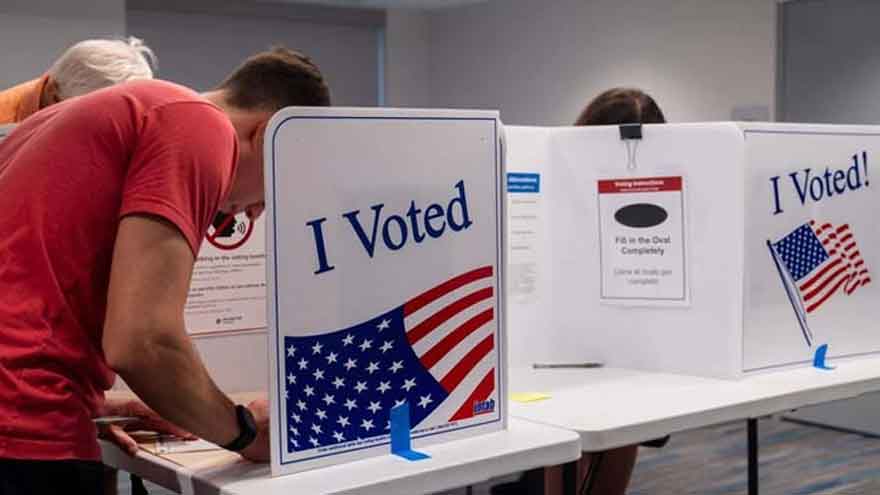
WASHINGTON (AFP) – Millions of Americans are heading to the polls on Tuesday in midterm elections that could significantly alter President Donald Trump’s political position in Washington, as Democrats seek to take control of the House of Representatives and make gains in the Senate.
A Republican loss in the House would allow Democrats to obstruct Trump's legislative plans and launch extensive investigations into his administration. Losing the Senate could also complicate his efforts to appoint Supreme Court justices and other senior officials.
The vote is being viewed as a nationwide assessment of Trump's second presidency, with growing public frustration over the cost of living and the war against Iran creating challenges for Republicans.
Voters are deciding the fate of all 435 House seats and 35 of the 100 Senate seats, while gubernatorial elections are taking place in 36 states. Democrats need to gain three seats in the House and secure a net increase of four Senate seats to take control of both chambers.
Trump returned to office last year pledging to reduce prices, but inflation, tariffs and higher fuel costs linked to the Middle East conflict have continued to put pressure on American households.
His approval rating has remained around the low 30s.
In Georgia's Atlanta suburbs, 77-year-old retired teacher Jane Callum was campaigning for Democratic Senator Jon Ossoff. She described the election as a crucial moment for the country's future.
"I really feel an obligation to do everything that I possibly can to change the direction that our country is going in now, and put it more on the path to democracy and away from autocracy," she told AFP.
Economic concerns dominate campaign
Republicans argue that Trump's tax reductions and tougher immigration policies will benefit the country, while portraying Democratic candidates as left-wing radicals.
However, the president devoted little attention to economic issues during his final public campaign appearance on Monday. Instead, much of his speech focused on the troubled renovation of Washington's Reflecting Pool.
"This is the last day before the midterm elections, the most important midterm I believe in our lifetime," Trump said 26 minutes into his address, before shifting his attention back to the renovation project.
Senate Democratic leader Chuck Schumer criticised the speech, calling it a "pathetic closing message".
Despite the challenges facing Republicans, some supporters remain optimistic about their prospects.
"We're going to win. As a matter of fact, we've probably already won," Texas military veteran Yvonne Clouser told AFP.
Republicans currently hold a 53-47 majority in the Senate, but Democrats are also competing in traditionally conservative states, including Kansas, Texas, Iowa, Ohio and Alaska.
At the same time, Democrats face difficult contests in states where they must defend vulnerable seats. In Michigan, an internal party dispute intensified after Congresswoman Haley Stevens endorsed Republican Mike Rogers instead of Democratic nominee Abdul El-Sayed.
Decision Desk HQ's final projections estimated that Democrats could secure 241 House seats compared with 194 for Republicans. Its forecast also indicated a possible Democratic Senate majority of 52-48.
Concerns over election results
Although opinion polls can underestimate support for a political party, Republicans are counting on strong voter turnout on Election Day.
More than 57 million Americans had already voted early ahead of Tuesday's polls, highlighting significant public participation.
The election campaign has generated more than $11 billion in political advertising, while billionaire Elon Musk, a close Trump ally, has spent hundreds of millions of dollars supporting Republican political efforts.
Attention is also turning to whether Republican leaders will accept the results once voting concludes.
Trump, who previously attempted to reverse his 2020 election defeat, has repeatedly alleged widespread voter fraud and accused Democrats of electoral misconduct without presenting evidence.
The Justice Department, led by one of Trump's close allies, has filed a lawsuit that could potentially prevent certification of Alaska's Senate race if Republican incumbent Dan Sullivan narrowly loses. A court, however, rejected the effort on the eve of the election.
In another development, the Supreme Court on Monday rejected an emergency request seeking to require California to set aside mail-in ballots cast by more than 20,000 people over claims that they might not be US citizens.
Trump is expected to follow the election results from the White House on Tuesday night. He has also indicated that he could resist Democratic efforts if Republicans lose control of Congress.
"I veto everything," Trump told a podcast on Monday, although he acknowledged that he could eventually reach agreements with Democrats.