Summary Japan's defense minister visited Yasukuni Shrine on the 81st anniversary of its WWII surrender, drawing strong condemnation from China and South Korea over its wartime symbolism.
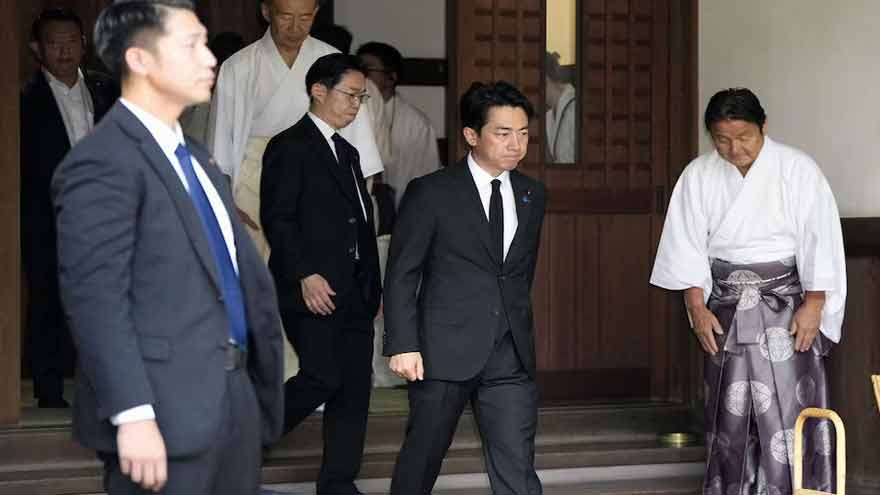
TOKYO, Aug 15 (Reuters) - Japanese Defense Minister Shinjiro Koizumi visited a shrine to the nation's war dead on Saturday, prompting rebukes from China and South Korea, which consider it a symbol of Tokyo's wartime aggression.
Marking the 81st anniversary of Japan's surrender in World War Two, Koizumi wore a dark suit and tie as he visited Yasukuni Shrine, local media images showed. Kimi Onoda, minister for economic security, also visited, public broadcaster NHK reported.
Prime Minister Sanae Takaichi, who visited the shrine in central Tokyo multiple times before becoming leader last October, sent a ritual offering, Kyodo news agency reported.
"China strongly condemns the negative moves by the Japanese side concerning the Yasukuni Shrine, and has already lodged solemn representations and a strong protest with Japan," a foreign ministry spokesperson said, according to state broadcaster CCTV.
South Korea's Foreign Ministry expressed "deep regret" over what it called the "anachronistic" actions of Japanese leaders who sent offerings or visited Yasukuni Shrine, and urged Japan's leaders to face history and demonstrate through actions "humble reflection and sincere remorse" for the past.
The ministry said in a statement this was an important basis for building future-oriented bilateral relations based on trust.
China and South Korea have said visits by senior Japanese officials gloss over Tokyo's wartime actions and damage diplomatic ties.
Among the 2.5 million war dead commemorated at Yasukuni are 14 wartime leaders convicted of the most serious war crimes, along with over 1,000 others found guilty by Allied tribunals after Japan's 1945 defeat. Japanese officials have explained past visits as being in their personal capacity to honour those who died in the nation's wars.
The last sitting Japanese prime minister to visit Yasukuni Shrine was Shinzo Abe in December 2013, when he drew an expression of disappointment from the administration of then-U.S. President Barack Obama.
Koizumi has visited the shrine in the past, including as agriculture minister last year. The last sitting prime minister to visit on the anniversary of Japan's surrender was his father, Junichiro, in 2006.