Summary Reuters witnessed multiple groups of mostly peaceful protesters in locations across the city, marking the largest single night of demonstrations in Havana since the crisis took hold in January
HAVANA (Reuters) – Protests broke out across the Cuban capital of Havana on Wednesday evening as the city confronted its worst rolling blackouts in decades amid a US blockade that has starved the island of fuel.
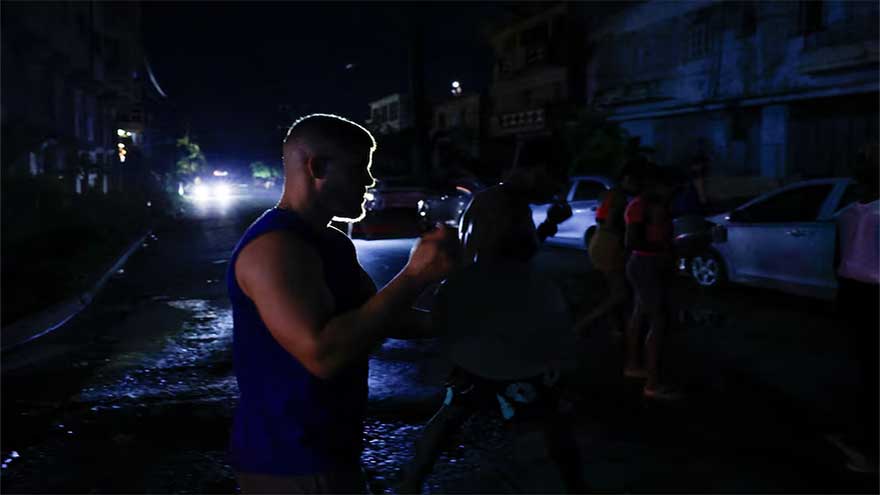
Crowds of hundreds of angry Cubans poured onto the streets in several outlying neighborhoods, blocking roads with burning piles of rubbish, banging pots and shouting "Turn on the lights!" and "The people, united, will never be defeated!"
Reuters witnessed multiple groups of peaceful protesters in locations across the city, marking the largest single night of demonstrations in Havana since the energy crisis took hold.
The shortages and blackouts have dramatically worsened since January when US President Donald Trump, who has said he wants to oust Cuba's communist-run government, imposed an embargo and threatened tariffs on any nation supplying the country with fuel.
Havana resident Rodolfo Alonso, shirtless and sweating, said he had decided to protest after his neighborhood of Playa went for more than 40 hours without electricity.
"I live in a community where there are lots of older people, many of them bed-ridden. Our food is spoiling," said Alonso, a state worker. "We started banging pots to see if they`d give us just three hours of electricity. That`s all we want. This isn`t a political problem."
In several cases, Reuters witnessed power return to an area where a protest was taking place, prompting the crowds of men, women and children to cheer, then quickly disperse.
There was a heavy police presence at each site, though security forces remained largely on the sidelines, observing and not intervening.
Irailda Bravo, 38, said she had decided to join a peaceful protest in Marianao after sleeping on her doorstep for days, forced out of her home by the heat.
"We know that the situation in the country is chaotic. But we have young kids. We have to work. We have a life. We need to rest, and we can`t," she said.
Cuba's energy and mines minister earlier in the day said the nation had completely run out of diesel and fuel oil, and that its power grid had entered a "critical" state.
"We have absolutely no fuel (oil), and absolutely no diesel," Energy Minister Vicente de la O said on state-run media. "We have no reserves."
Blackouts have increased dramatically this week, with many districts of Havana without light for 20 to 22 hours a day, the minister said, heightening tensions in a city already exhausted by food, fuel and medicine shortages.
PLEAS FOR FUEL
The country's top energy official said Cuba continued negotiations to import fuel despite the blockade, but said rising global oil and transportation prices as a result of the US-Israeli war with Iran were further complicating that effort.
"Cuba is open to anyone that wants to sell us fuel," the minister said.
Neither Mexico nor Venezuela, once top suppliers of oil to Cuba, have sent fuel to the island since Trump's order threatening tariffs.
Only a single large oil tanker, the Russian-flagged Anatoly Kolodkin, has delivered crude oil to Cuba since December, providing temporary relief to the island in April.
The renewed power cuts in Havana and beyond come as the US blockade on fuel imports to Cuba enters its fourth month, crippling public services across the Caribbean island of nearly 10 million people.
The United Nations last week called Trump's fuel blockade unlawful, saying it had obstructed the "Cuban people’s right to development while undermining their rights to food, education, health, and water and sanitation."