Summary Islamic State seized large tracts of Syria and Iraq in 2014
MUNICH (Reuters) - Iraq is in talks with other countries including Arab and Muslim states to repatriate Islamic State prisoners, its foreign minister said, and the US military said it had completed a mission to transfer thousands of IS detainees to Iraq from Syria.
Speaking in an interview with Reuters on the sidelines of the Munich Security Conference, Fuad Hussein said Baghdad would need financial aid to deal with the influx and was worried about a rise in Islamic State activity just over the border in Syria.
Islamic State seized large tracts of Syria and Iraq in 2014 before it was driven out by US-led coalition forces five years later, and many of its militants were detained, although remnants of the jihadist group still operate.
"I think around 3,000 have already been transferred into Iraqi prisons. So the process has started and we are continuing that process," Hussein said on Friday.
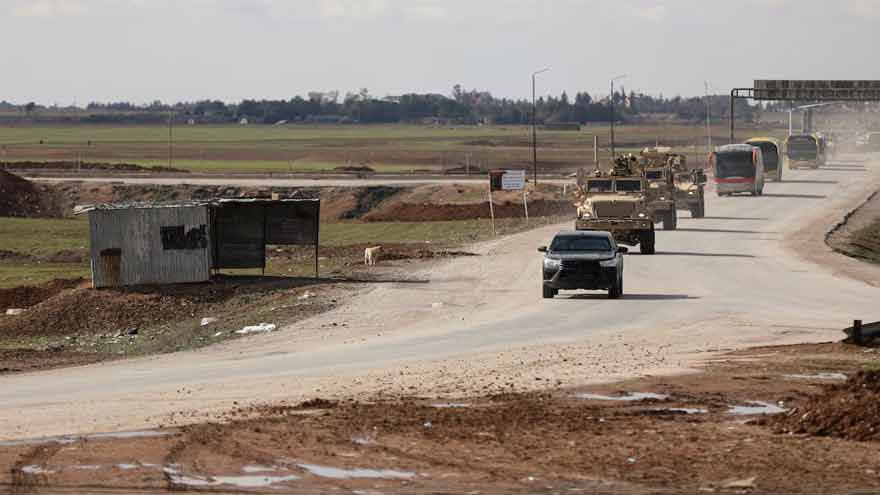
Separately, the US Central Command said the US military had now completed its mission in Syria after transferring 5,700 adult male Islamic State detainees to Iraq. It had said in January that it expected to move 7,000.
Iraqi officials did not immediately respond to clarify the difference in the figures given by Hussein and Centcom.
RESURGENCE IN ISLAMIC STATE IN SYRIA
The rapid collapse of autonomy-minded Kurdish-led forces in northeast Syria since the end of Syria's civil war in late 2024 had raised fears for the security of prisons and detention camps for IS militants that they were guarding.
"We also started talking to some countries so that they can supply us with financial support, because if those thousands of terrorists stay in Iraq for a long time, I mean, security-wise, it's very dangerous, so we need support from various countries," Hussein said in the interview.
He said discussions had also begun with some Arab and Muslim countries to take back militants who are their citizens, though European countries remained hesitant because their legal systems could allow fighters to be released from prison sooner.
"We have already started talking to various countries so that in the near future, they will take their own citizens back, because at the end, they are from other countries," he said.
Hussein also warned that there had been a recent uptick in IS activities in Syria after the Damascus government's offensive unravelled Kurdish-led SDF forces in northeastern Syria.
"As for IS activities in Syria, we are really worried because they are on the other side of the border and they have become very active recently," he said.
"I think it has to do with the recent conflict between Syrian Democratic Forces and the Syrian administration or Syrian army. At the same time, there are many people who believe in this ideology inside Syria."
TAKING US MESSAGES SERIOUSLY
While the United States is helping Iraq handle the issue, Hussein acknowledged that despite broadly good relations, there have been some tensions.
In January, US President Donald Trump warned Iraq that if it picked Iranian-backed former prime minister Nouri al-Maliki to once again take up the role, Washington would no longer help the major oil producer and close US ally.
"This is an internal issue," Hussein said when asked about Trump's comments. "We are trying to deal with that. Of course, we are taking any signals from Washington very seriously, but we are going to deal with that."
He added that US troops were still scheduled to leave Iraq by the end of 2026.