Summary EU leaders are set to discuss options at an emergency summit in Brussels on Thursday. One option is a package of tariffs on $107.7 billion of US imports that could automatically kick in on February 6
BRUSSELS (Reuters) – European Union ambassadors reached broad agreement on Sunday to intensify efforts to dissuade US President Donald Trump from imposing tariffs on European allies, while also preparing retaliatory measures should the duties go ahead, EU diplomats said.
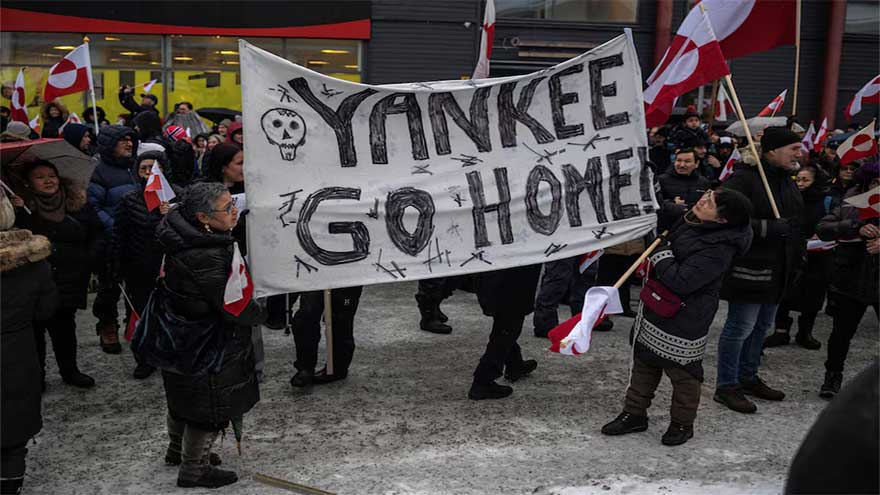
Trump vowed on Saturday to implement a wave of increasing tariffs from February 1 on EU members Denmark, Sweden, France, Germany, the Netherlands and Finland, along with Britain and Norway, until the US is allowed to buy Greenland, a step major EU states decried as blackmail.
EU leaders are set to discuss options at an emergency summit in Brussels on Thursday. One option is a package of tariffs on 93 billion euros ($107.7 billion) of US imports that could automatically kick in on February 6 after a six-month suspension.
The other is the so far never used "Anti-Coercion Instrument" (ACI), which could limit access to public tenders, investments or banking activity or restrict trade in services, in which the US has a surplus with the bloc, including in digital services.
The tariff package appeared to command broader support as a first response than anti-coercion measures, where the picture was currently "very mixed", according to an EU source.
DIALOGUE IN DAVOS
European Council President Antonio Costa, who chairs EU summits, said in a social media post that his consultations with EU members had shown their strong commitment to support Denmark and Greenland and readiness to defend against any form of coercion.
Danish Foreign Minister Lars Lokke Rasmussen, visiting his Norwegian counterpart in Oslo, said Denmark would continue to focus on diplomacy, referring to an agreement Denmark, Greenland and the US made on Wednesday to set up a working group.
"The US is also more than the US president. I've just been there. There are also checks and balances in American society," he added.
The EU's efforts at dialogue are likely to be a key theme of the World Economic Forum in Davos, where Trump is set to deliver a keynote address on Wednesday in his first appearance at the event in six years.
"All options on the table, talks in Davos with the US and leaders gather after that," said one EU diplomat in summarising the EU's plan.
The eight targeted countries, already subject to US tariffs of 10% and 15%, have sent small numbers of military personnel to Greenland, as a row with the United States over the future of Denmark's vast Arctic island escalates.
"Tariff threats undermine transatlantic relations and risk a dangerous downward spiral," they said in a joint statement published on Sunday, adding they were ready to engage in dialogue, based on principles of sovereignty and territorial integrity.
Danish Prime Minister Mette Frederiksen said in a written statement she was heartened by the consistent messages from the rest of the continent, adding: "Europe will not be blackmailed".
The tariff threat unsettled global markets, with the euro and sterling falling against the dollar and a return to volatility expected.
QUESTION MARKS OVER US TRADE DEALS
A source close to French President Emmanuel Macron said he was pushing for activation of the ACI. Irish Prime Minister Micheal Martin said that while there should be no doubt that the EU would retaliate, it was "a bit premature" to activate the as yet unused instrument.
Italian Prime Minister Giorgia Meloni, who is closer to the US President than some other EU leaders, described the tariff threat on Sunday as "a mistake", adding she had spoken to Trump a few hours earlier and told him what she thought.
Asked how Britain would respond to new tariffs, Culture Secretary Lisa Nandy said allies needed to work with the United States to resolve the dispute.
"Our position on Greenland is non-negotiable ... It is in our collective interest to work together and not to start a war of words," she told Sky News on Sunday.
The tariff threats do though call into question trade deals the US struck with Britain in May and the EU in July.
The limited agreements have already faced criticism about their lopsided nature, with the US maintaining broad tariffs, while their partners are required to remove import duties.
The European Parliament looks set to suspend its work on the EU-US trade deal. It had been due to vote on removing many EU import duties on January 26-27, but Manfred Weber, head of the European People's Party, the largest group in parliament, said late on Saturday that approval was not possible for now.
German Christian Democrat lawmaker Juergen Hardt also mooted what he told Bild newspaper could be a last resort "to bring President Trump to his senses on the Greenland issue", a boycott of the soccer World Cup that the US is hosting this year.