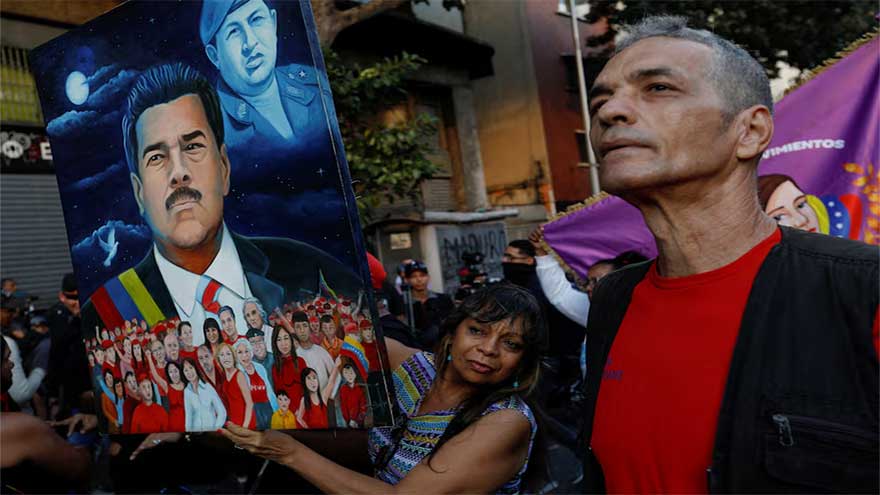
Summary The remarks by Trump came on the eve of Maduro's scheduled appearance on Monday before a federal judge in New York. Maduro was detained during a military raid on Saturday in Caracas
(Reuters) – Deposed Venezuelan President Nicolas Maduro was due to appear in a US court on Monday after his weekend capture by American forces, with US President Donald Trump leaving open the possibility of another incursion if the United States doesn't get its way with Venezuela's interim government.
Trump told reporters on Sunday that he could order another strike if Venezuela does not cooperate with US efforts to open up its oil industry and stop drug trafficking. He also threatened military action in Colombia and Mexico and said Cuba's communist regime "looks like it's ready to fall" on its own.
The Colombian and Mexican embassies in Washington did not immediately return requests for comment.
The remarks by Trump came on the eve of Maduro's scheduled appearance on Monday before a federal judge in New York. Maduro was detained during a military raid on Saturday in Caracas that has plunged Venezuela into uncertainty.
Trump administration officials have portrayed the seizure as a law-enforcement action to hold Maduro accountable for criminal charges filed in 2020 that accuse him of narco-terrorism conspiracy. But Trump himself has said other factors were at play, saying the raid was prompted in part by an influx of Venezuelan immigrants to the United States and the country's decision to nationalise US oil interests decades ago.
"We're taking back what they stole," he said aboard Air Force One as he returned on Sunday to Washington from Florida.
Oil companies will return to Venezuela and rebuild the country's petroleum industry, Trump said. "They're going to spend billions of dollars and they're going to take the oil out of the ground," he said.
Meanwhile, Maduro's government remains in power in Caracas, and top officials have remained defiant.
Vice President Delcy Rodriguez, who has taken over as interim leader, has said Maduro remains president and has contradicted Trump's claim that she is willing to work with the United States. Rodriguez, who also serves as oil minister, has long been considered the most pragmatic member of Maduro's inner circle.
Maduro, 63, faces charges that accuse him of providing support to major drug trafficking groups, such as the Sinaloa Cartel and the Tren de Aragua gang.
Prosecutors say he directed cocaine trafficking routes, used the military to protect shipments, sheltered violent trafficking groups and used presidential facilities to move drugs. The charges, first filed in 2020, were updated on Saturday to include his wife, Cilia Flores, who is accused of ordering kidnappings and murders.
Maduro has denied wrongdoing, and it could be several months before he stands trial.
The United States has deemed Maduro an illegitimate dictator since he declared victory in a 2018 election marred by allegations of massive irregularities. But Trump has dismissed the idea of opposition leader and Nobel Peace Prize winner Maria Corina Machado taking over, saying she lacks support.
Machado was banned from the 2024 election but has said her ally Edmundo Gonzalez has a mandate to take the presidency and some international observers say he overwhelmingly won that vote.
On Sunday, Trump said his administration will try to work with Venezuela's current government to clamp down on drug trafficking and open up its oil industry, rather than pushing for elections to install new leaders.
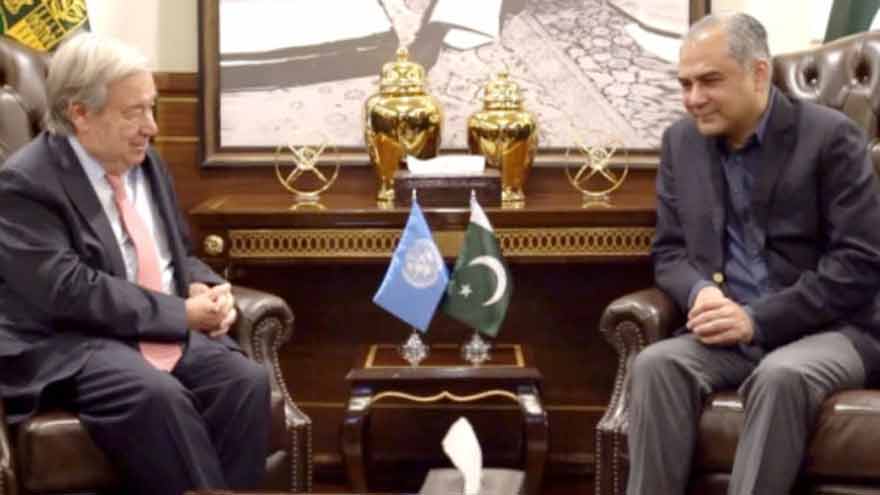
Though Maduro has few allies on the world stage, many countries have questioned the legality of seizing a foreign head of state and called on the US to respect international law. The U.N. Security Council planned to meet on Monday to discuss the US attack, which Secretary-General Antonio Guterres described as a dangerous precedent.
The attack has also raised questions in Washington, where opposition Democrats say they were misled by the administration about its Venezuela policy. Secretary of State Marco Rubio was due to brief top lawmakers on Capitol Hill later on Monday.
Once one of the most prosperous nations in Latin America, Venezuela's economy has collapsed over the past 20 years, sending about one in five Venezuelans abroad in one of the world's biggest exoduses. The removal of Maduro, a former bus driver who led Venezuela for more than 12 years after the death of strongman Hugo Chavez, could lead to even more destabilisation in the nation of 28 million people.