Summary Beverage giant’s 15.7 billion euro offer for JDE Peet’s, announced on Monday
NEW YORK (Reuters Breakingviews) - Keurig Dr Pepper is pitching single-origin over a weak corporate blend. The sprawling beverage giant’s 15.7 billion euro ($18.3 billion) offer for JDE Peet’s, announced on Monday, is a prelude to splitting back up into one company focused solely on coffee and another on energy drinks and soda.
Both companies share a common element. Investment group JAB steered coffee-maker Keurig Green Mountain through to a 2018 merger, with Dr Pepper Snapple, before shrinking its stake below 5%. However, it still holds nearly 70% of JDE Peet’s voting power. This transaction will effectively cash it out of the latter investment.
This is an auspicious moment to do so. At 31.85 euros a share, the bid represents a 20% premium for JDE Peet’s, based on Friday’s closing prices. By that point, though, the stock had risen 59% from the start of the year, as new-ish boss Rafael Oliveira began turning around a long slump since the company’s 2020 listing.
The flipside is that the deal looks expensive for the buyer. Take $400 million of promised profit-boosting cost cuts, add it to JDE Peet’s forecast operating profit according to Visible Alpha, and tax it at Keurig’s expected rate. The implied return on invested capital should top 7%, Breakingviews calculates, but fall short of JDE Peet’s 8% weighted-average cost of capital, according to Morningstar.
Any promise of value-creation rests on winning a higher valuation by splitting up the combined product portfolio. The logic is straightforward. Dr Pepper has tied Pepsi for America’s second-favorite soda by sales. That’s a strong anchor for a pure-play soda group, which tends to win a higher multiple.
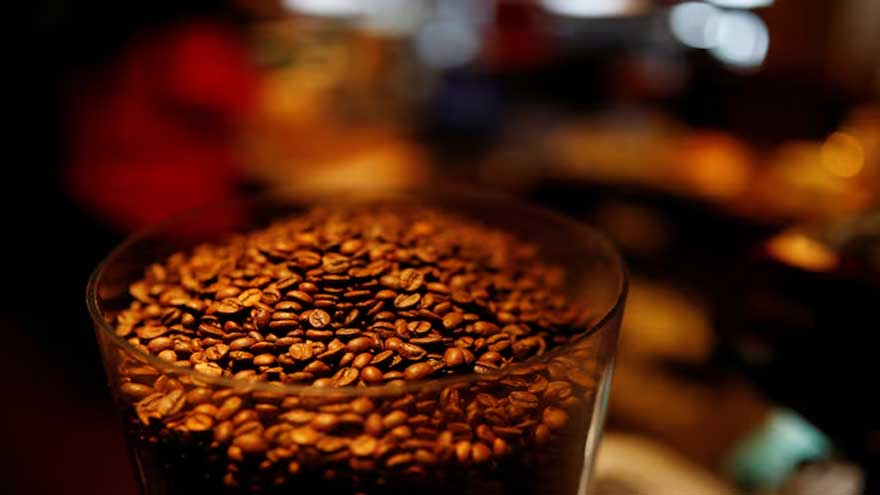
Coffee is a harder sell. JDE Peet’s initial share slide came amid spiraling prices for beans and an ill-fated push into capsules. Still, bulking up with Keurig gives it greater economies of scale and could plug product holes. The eventual standalone coffee company’s $3.1 billion in trailing-twelve-month EBITDA would be worth $35 billion on the over-11-times multiple of peers like Nestle.
That sums to over $100 billion, compared to around $83 billion of enterprise value between the two companies as of Friday. It does not solve rising bean costs or intensifying competition from global rivals like Starbucks and local baristas. Nor does it make soda more appealing to a public that is increasingly health-conscious. Lasting value will depend on solving these deeper challenges, something no quick caffeine hit can guarantee.