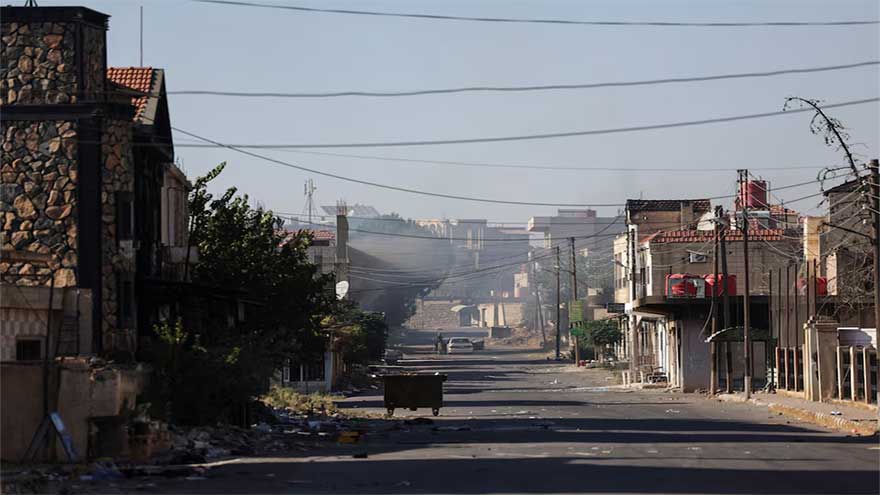
Summary Reuters reporters heard gunfire from inside the city of Sweida and saw shells land in nearby village
DAMASCUS (Reuters) – Residents reported calm in the Syrian city of Sweida on Sunday after the Islamist-led government declared that Bedouin fighters had withdrawn from the predominantly Druze city and the United States stepped up calls for an end to fighting.
There was no sound of gunfire on Sunday morning, according to a resident speaking from the city outskirts, while a Druze source in the region said there was calm in most areas.
Kenan Azzam, a dentist, described the situation on Sunday morning as "a tense calm" but told Reuters residents were still struggling with a lack of water and electricity.
"The hospitals are a disaster and out of service, and there are still so many dead and wounded," he said by phone.
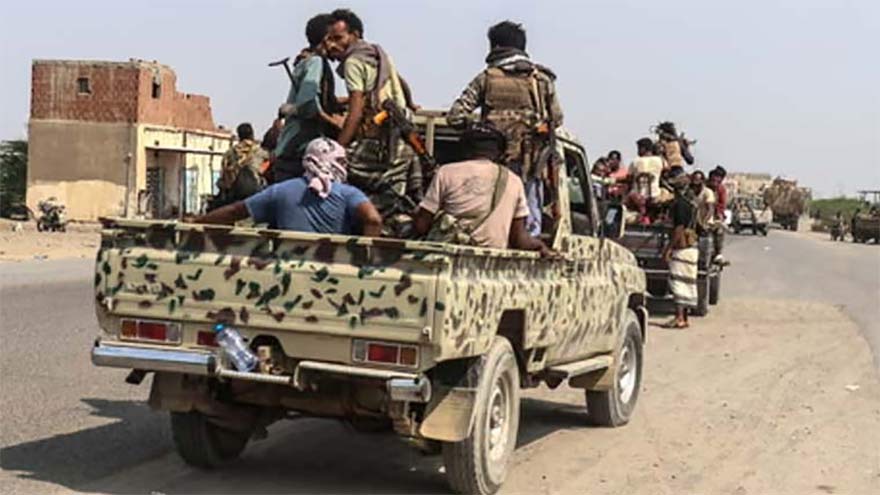
The fighting began a week ago with clashes between Bedouin and Druze fighters. Damascus then sent troops to quell the fighting, but they were accused of carrying out widespread violations against the Druze and were hit by Israeli strikes before withdrawing under a truce agreed on Wednesday.
The Syrian presidency had announced a new ceasefire early on Saturday but it quickly collapsed into renewed fighting, underlining the challenge interim President Ahmed al-Sharaa faces in asserting authority over the fractured nation.
Sectarian clashes escalated on Saturday, with machinegun fire and mortar shelling ringing out after days of bloodshed as the government struggled to implement a ceasefire.
Reuters reporters heard gunfire from inside the city of Sweida and saw shells land in nearby villages. There were no immediate, confirmed reports of casualties.
The government had said security forces were deploying in the southern region to try to keep peace, and urged all parties to stop fighting after nearly a week of factional bloodshed in which hundreds have been killed.
Late on Saturday, the interior ministry said clashes in Sweida city had been halted and the area cleared of Bedouin tribal fighters following the deployment.
The Syrian Observatory for Human Rights, a British-based monitoring group, said clashes since last week around Sweida had killed at least 940 people. Reuters could not independently verify the toll.
Interim President Ahmed al-Sharaa said "Arab and American" mediation had helped restore calm, before the clashes escalated. He criticised Israel for airstrikes during the week.
VIOLENCE IN DRUZE REGION CHALLENGES DAMASCUS
The fighting is the latest challenge to the control of Sharaa's Islamist-dominated government, which took over after rebels toppled autocratic president Bashar al-Assad in December.
It started last week as clashes between the Druze - a religious minority native to southern Syria, the Israeli-occupied Golan Heights and parts of Lebanon and Jordan - and Syrian Bedouin tribes.
Government forces then arrived to try to quell tensions, clashing with Druze gunmen and attacking the Druze community.
Saturday's violence once again pitted Druze against Bedouin, witnesses said.
The fighting has drawn in neighbouring Israel, which carried out airstrikes in southern Syria and on the defence ministry in Damascus this week while government forces were fighting with the Druze. Israel says it is protecting the Druze, who also form a significant minority in Israel.
But Israel and Washington differ over Syria. The US supports a centralised Syria under Sharaa's government, which has pledged to rule for all citizens, while Israel says the government is dominated by jihadists and a danger to minorities.
In March, Syria's military was involved in mass killings of members of the Alawite minority, to which much of Assad's elite belonged.
ISRAEL-SYRIA TENSIONS
In a statement on Saturday, the Syrian presidency announced an immediate ceasefire and urged an immediate end to hostilities. Sharaa said Syria would not be a "testing ground for partition, secession, or sectarian incitement".
"The Israeli intervention pushed the country into a dangerous phase that threatened its stability," he said in a televised speech.
Sharaa appeared to blame Druze gunmen for the latest clashes, accusing them of revenge attacks against Bedouins.
Israeli Foreign Minister Gideon Saar said Sharaa was siding with the perpetrators.
"In al-Shara’s Syria, it is very dangerous to be a member of a minority — Kurd, Druze, Alawite, or Christian," he posted on X.
US envoy Tom Barrack announced on Friday that Syria and Israel had agreed to a ceasefire.
Barrack, who is both US ambassador to Turkey and Washington's Syria envoy, urged Druze, Bedouins and Sunnis, together with other minorities, to "build a new and united Syrian identity".
Israel has attacked Syrian military facilities in the seven months since Assad fell, and says it wants areas of southern Syria near its border to remain demilitarised.
On Friday, an Israeli official said Israel had agreed to allow Syrian forces limited access to Sweida for two days.
SWEIDA HOSPITAL FILLS WITH CASUALTIES
Mansour Namour, a resident of a village near Sweida city, said mortar shells were still landing near his home on Saturday afternoon, and that at least 22 people had been wounded.
A doctor in Sweida said a local hospital was full of bodies and wounded people from days of violence.
"All the injuries are from bombs, some people with their chests wounded. There are also injuries to limbs from shrapnel," said Omar Obeid, director of the hospital.