Summary Warring Sudanese factions fight on after failing to agree truce
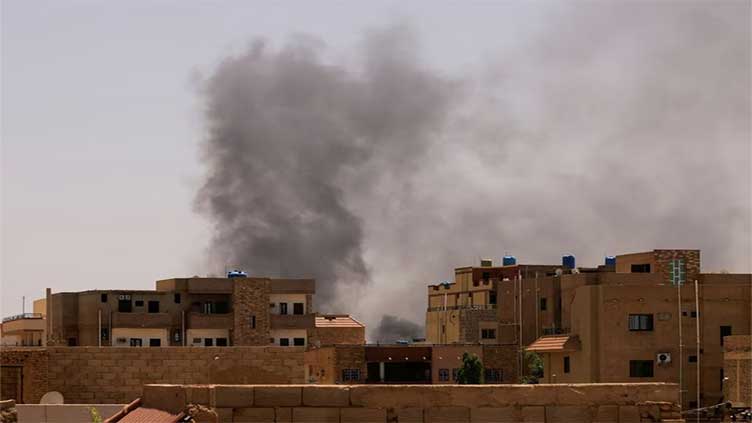
KHARTOUM (Reuters) - Air strikes and artillery pounded Khartoum on Friday after Sudan's warring army and Rapid Support Forces paramilitary failed to agree a ceasefire despite committing to protect civilians and allow humanitarian access
A so-called declaration of principles was signed in Saudi Arabia late on Thursday after nearly a week of talks between the two factions, which had shared power before falling out over a transition to civilian rule.
RSF adviser Moussa Khadam told Sky News Arabia the group would abide by the principles agreed to and aimed to reach a complete ceasefire. But there was no let-up in violence and the army has not commented on the agreement.
Since clashing suddenly on April 15, the rival military factions have shown little sign they are ready to end deadly fighting that has uprooted hundreds of thousands of people and could pitch Sudan into a full-blown civil war.
The conflict has paralysed Sudan's economy and strangled its trade, aggravating a ballooning humanitarian crisis with the U.N. saying on Friday that 200,000 people have now fled into neighbouring states.
However, U.N. Sudan envoy Volker Perthes said he expected ceasefire talks to start again on Friday or Saturday and, while previous truces broke down because both sides thought they could win, neither now believes that victory would be quick.
His upbeat assessment contrasted with disappointment among many in the capital.
"We were expecting that the agreement would calm down the war, but we woke up to artillery fire and airstrikes," said Mohamed Abdallah, 39, living in Khartoum. City residents said there was heavy fighting in separate parts of Khartoum and its adjoining sister city of Bahri.
In Darfur in the west, fighting between local militias that killed 450 people last month flared again in the city of Geneina as one group attacked another, rattling neighbourhoods with gunfire and artillery after two weeks of comparative calm.
In other parts of Darfur, where a war has simmered since 2003 killing 300,000 people and displacing 2.5 million, locally arranged ceasefires between the army and RSF appeared to hold.
In Port Sudan on the Red Sea, Al-Taj al-Tayyib said he hoped Thursday's agreement represented a start towards peace. "Our country doesn't need all these crises. I swear this country doesn't need that," he said.
HUMANITARIAN DEAL
Thursday's deal, the product of Saudi and U.S.-brokered talks in Jeddah, includes commitments to allow safe passage for civilians, medics and humanitarian relief, and to minimize harm to civilians and public facilities.
A statement from Sudan's cabinet said in light of the deal, it was preparing to receive aid at Port Sudan airport, Wadi Seyedna on the outskirts of the capital and Khartoum airport after it is repaired.