



How China's new No.2 hastened the end of Xi's zero-COVID policy
World
How China's new No.2 hastened the end of Xi's zero-COVID policy
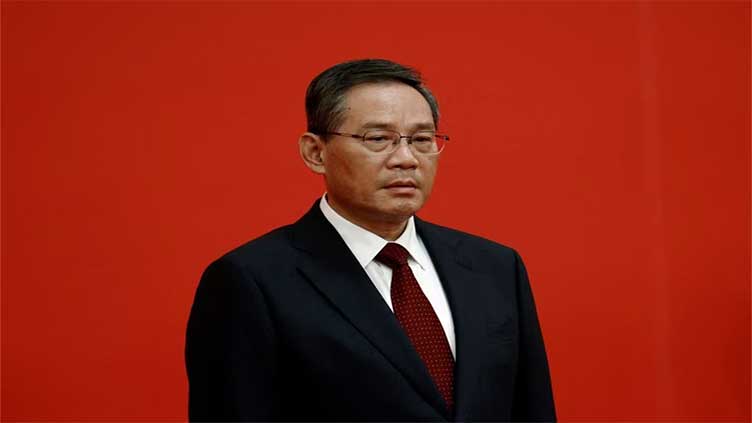
HONG KONG/BEIJING/SHANGHAI (Reuters) - As unprecedented protests against China's zero-COVID policies escalated in November, Li Qiang, the man recently elevated to No.2 on the ruling Communist Party's Politburo Standing Committee, seized the moment.
Top Chinese officials and medical experts had been quietly formulating plans over the preceding weeks to dismantle President Xi Jinping's zero-COVID strategy and gradually reopen the country towards the end of 2022, with the aim of declaring a return to normality in March, four people with knowledge of the matter told Reuters.
Li, who is set to be named the country's new premier this month, took a more urgent view.
He abruptly drove a decision to activate the reopening plans sooner than intended, in an effort to contain the economic toll of the zero-COVID campaign and protests that had rattled the leadership, said the four people and another person with knowledge of the matter. The upshot was a chaotic reopening in December, when China suddenly ended lockdowns, mass testing and other restrictions.
Beijing has not publicly explained its decision-making process behind its U-turn on the zero-COVID approach. Xi and Li, as well as the State Council, China's cabinet, did not respond to requests for comment from Reuters submitted via the State Council Information Office (SCIO) about the discussions regarding reopening the country.
Reuters assembled this account of China's path to reopening after speaking to more than half a dozen people with knowledge of the discussions. The previously unreported details offer a rare window into deliberations among top Chinese officials and healthcare experts, including differences between Li and Xi about the pace of reopening. The people spoke on the condition of anonymity because of the subject's sensitivity or because they weren't authorised to talk to the media.
The protests in November marked a turning point in Xi's handling of COVID management as he started to take a less hands-on approach and allowed Li, his long-time ally, to take charge, two of the people said.
Top leaders ultimately opted for a hurried reopening that would pacify the young protesters because the threat the dissenters could pose to the regime's stability was seen as more politically risky than allowing the virus to spread unchecked, two of the sources said.
PREPARING SCENARIOS
At a Communist Party congress in mid-October where he secured a precedent-breaking third term and unveiled his new leadership team, Xi had extolled his zero-COVID policy, saying it was achieving positive results. Yet, before the month was out, officials gathered in Beijing to consider how to unwind that strict approach.
Wang Huning, deputy head of the party's central COVID taskforce since early 2020 and a member of China's elite seven-man Politburo Standing Committee, held a closed-door meeting in late October with top medical experts and senior officials, including those from the propaganda apparatus, according to three of the sources.
Wang repeatedly asked the attendees how many deaths an abandonment of COVID controls would cause in a worst-case scenario, and pressed them to work on various reopening roadmaps with differing paces, two of the people said. Wang did not respond to a request for comment submitted via the SCIO about his role in the talks.
Officials from the National Health Commission (NHC) proposed benchmarks for full reopening, the key being improving the elderly vaccination rate, said two of the sources.
Meanwhile, some local-level party workers and healthcare officials were grappling with growing challenges in implementing the zero-COVID policy.
A local leader of a sub-district in Beijing with over 100,000 residents told Reuters that by the second half of last year it had run out of money to pay testing companies and security firms to enforce restrictions.
"From my perspective, it's not that we set out to relax the zero-COVID policy, it's more that we at the local level were simply not able to enforce the zero-COVID policy anymore," the official said.
Beijing's local government, which did not respond to a request for comment, spent nearly 30 billion yuan ($4.35 billion) on COVID prevention and controls last year, official data show.
Party leaders are expected to present plans to help the economy recover from pandemic curbs at China's annual meeting of parliament starting March 5.
