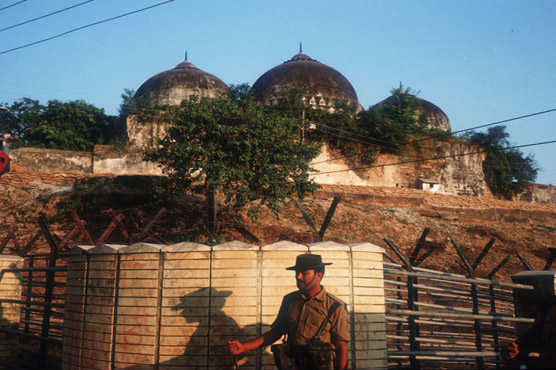
Summary Jawad has said those favouring giving up the mosque's land for a temple should instead give up their property for it. Photo: Reuters
(Web Desk) – A senior Shia cleric and general secretary of Majlis-e-Ulema-e-Hind, Maulana Kalbe Jawad of Lucknow has said on Friday that nothing but a mosque can be constructed on land that has been designated for a mosque.
He was speaking on the Babri Masjid-Ram Janmabhoomi dispute.
According to a report by Hindustan Times, he also said that the people who’re crying out loud about shifting of the Babri Masjid to another spot making way for the ‘Ram Mandir’ should instead give up their personal property for the purpose.
Pouring out strongly Maulana Kalbe Jawad told Hindustan Times, "Those suggesting giving up of the Babri Masjid land for the temple only have the right to donate their own land and not stake claim on a land earmarked for a mosque. What is not your own, does not give you the right to make decisions for it. These people favouring the shift should instead give up their house and property for it."
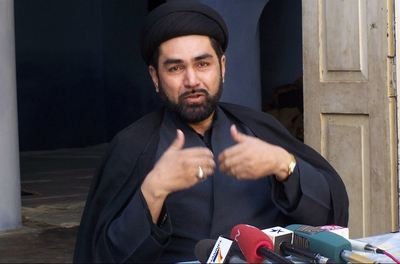
Maulana Kalbe Jawad, General Secretary of Majlis-e-Ulema-e-Hind. Photo: Times of India
The cleric has said that he was speaking on behalf the national level body of Majlis-e-Ulema-e-Hind and of the Shia community of not just the country but the whole world, who will respect the decision of the Supreme Court on the dispute, reported The Hindu.
Referring to the recent UP Shia Central Waqf Board s proposal of relocating the Babri Masjid and of senior Shia cleric Maulana Kalbe Sadiq s personal view on the subject stating giving up of Babri Masjid land for the temple, the cleric said that the community was on the side of the All India Muslim Personal Law Board in maintaining that a mosque can neither be relocated nor its land be given to somebody else.
Jawad had earlier condemned the affidavit filed by UP Shia Central Waqf Board that supported the shifting of the Babri Masjid to a different location, as a ruse to create rift between the Shia and Sunni communities. He had also said earlier that the Board s affidavit had no legal or religious sanction and does not hold true for the entire Shia population of the country.