Summary The UN authorized EU naval force to intercept ships suspected of arms smuggling to Libya.
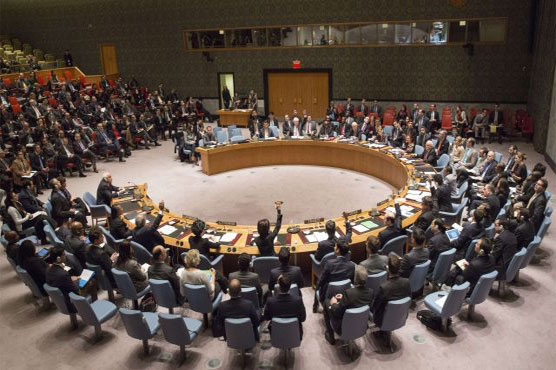
UNITED NATIONS (AFP) - The UN Security Council on Tuesday authorized an EU naval force to intercept ships suspected of arms smuggling to Libya, moving to shore up Tripoli s unity government as it battles the Islamic State group.
The council unanimously adopted a resolution drafted by Britain and France that expands the mission of Operation Sophia, which has been combating migrant-trafficking in the Mediterranean.
French Ambassador Francois Delattre, who holds the council s presidency this month, said the measure is a potential "game-changer," by cutting off the arms flow "that feeds the instability" in Libya.
Operation Sophia s enforcement of an arms embargo would help the UN-backed unity government as it struggles to establish its authority over the entire north African country.
Militias loyal to the new government of Prime Minister Fayez al-Sarraj are battling to retake from IS jihadists the key city of Sirte.
Libya descended into chaos during the 2011 uprising against Moamer Kadhafi and the new UN-brokered government set up office in Tripoli only two months ago.
The arms embargo was imposed on Libya in 2011, but UN sanctions monitors have reported shipments from Egypt, Turkey, the United Arab Emirates and Sudan to various factions.
Libya is awash with weapons, with some 20 million pieces of armaments of all types in a country of six million people, according to the United Nations.
Following the UN vote, EU foreign ministers were expected to formally task Operation Sophia with combating arms smuggling when they meet in Luxembourg on Monday.
The resolution invokes Chapter 7 of the UN charter, which allows for the use of military force.
It grants a 12-month mandate to EU vessels to "inspect, without undue delay, on the high seas off the coast of Libya, vessels bound to, or from Libya which they have reasonable grounds to believe are carrying arms or related material to or from Libya."
Weeks of negotiations focused on addressing concerns from Russia and Egypt.
These included a mention that the EU naval force must "make good-faith efforts" to first seek consent from the ship s flag state before carrying out any inspection.
Under the measure, EU vessels are authorized to "use all measures commensurate to the specific circumstances to carry out such inspections" on the high seas, off Libya s coast.
The EU force received UN permission to "seize and dispose" of the weapons and divert vessels and their crew to a nearby port.
The adoption of the resolution coincides with a push to grant the Sarraj government an exemption to the arms embargo for purchases of military equipment to confront IS and rival militias.
That request for an exemption, however, is conditional on receiving assurances from the unity government that it will properly store and keep track of the new weapons to prevent them from falling in the wrong hands.
Council members also want Tripoli to provide a clear command structure of the various militias that are now claiming to be fighting on the unity government s behalf.