Summary Syria's regime said Thursday it was ready to take part in new peace talks in Geneva.
BEIRUT (AFP) - Syria s regime said Thursday it was ready to take part in new talks in Geneva aimed at ending the war but appeared to make its participation conditional on which opposition groups will attend.
It came as the Islamic State (IS) jihadist group pushed further into a key city in eastern Syria in fighting that reportedly left more than two dozen regime loyalists dead.
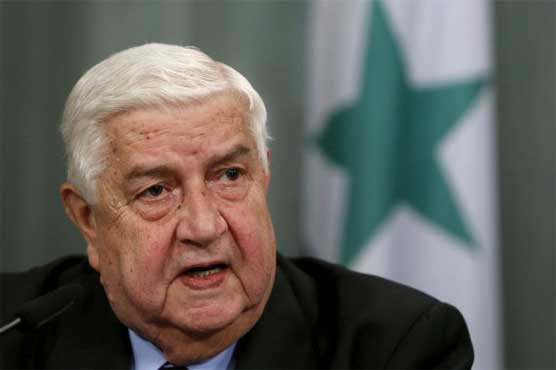
During an official visit to China on Thursday, Foreign Minister Walid Muallem said Damascus "is ready to participate in the Syrian-Syrian dialogue in Geneva without any foreign interference."
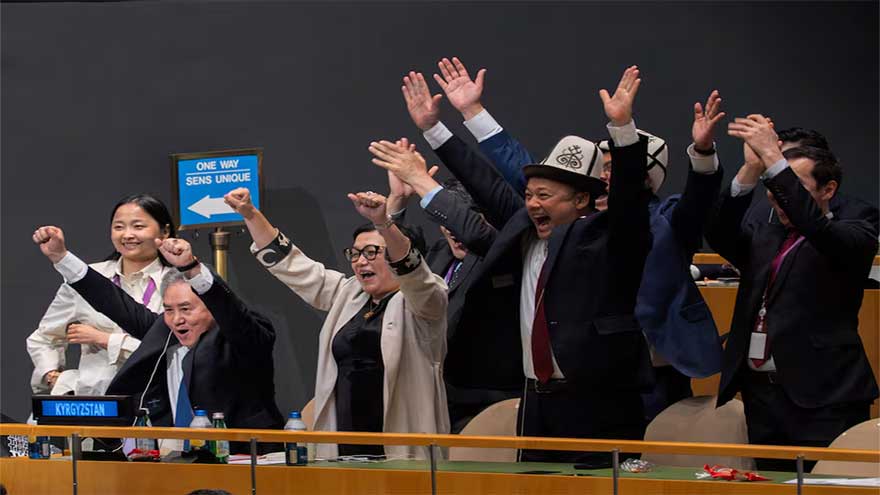
Last week, the UN Security Council unanimously adopted a resolution endorsing a peace plan to bring the regime and opposition together for talks in January.
The plan is the result of nearly two months of strenuous efforts between top diplomats from 17 countries, including regime backers Russia and Iran.
But it does not address the sharpest difference between opposition groups and the regime: the fate of Syrian President Bashar al-Assad.
Muallem s comments on Thursday seemed to indicate government approval of the plan -- but with apparent preconditions.
He said Syria rejected "foreign interference" and the government s negotiating team "will be ready as soon as we receive a list of the opposition delegation".
Speaking after meeting his Chinese counterpart Wang Yi, Muallem said Syria was waiting to receive a list of "terrorist organisations" that would not be allowed to participate in the talks.
The UN tasked Jordan with creating the banned list, which was submitted Friday and apparently included IS and the Al-Qaeda-linked Al-Nusra Front.
But Syria s government has systematically referred to all its opponents, including non-Islamist groups, as "terrorists".
A landmark summit in Saudi Arabia earlier this month saw armed and political branches of the opposition agree to talks with Assad s government.
The opposition delegation to future peace negotiations is expected to include the factions present in Riyadh, as well as other groups on the ground in Syria.
The UN resolution calls for talks in early January that would lead to the "establishment of an inclusive transitional governing body with full executive powers" within six months.
Muallem, however, only referred to an eventual "national unity government".
He said Damascus would "compose a constitutional committee to look for a new constitution with a new law of election so the parliamentary election will be held within the period of 18 months, more or less".
The UN resolution was received coolly by Syrian opposition forces, including the main group in exile, the Istanbul-based National Coalition.
Previous efforts to negotiate a political solution to Syria s nearly five-year conflict have faltered, including the 2014 Geneva talks between the regime and opposition forces.
But with the violent rise of IS, world powers have redoubled efforts to contain Syria s civil war, which has left more than 250,000 people dead.
The extremist organisation has overrun swathes of territory across Syria, declaring a self-styled caliphate governed by a literal interpretation of Islamic law.
Late Wednesday, IS militants seized another neighbourhood in the eastern city of Deir Ezzor, strengthening their position in the oil-rich province.
The attack began when three IS suicide bombers drove explosive-laden cars into the city s industrial neighbourhood, killing at least 11 pro-regime fighters, the Syrian Observatory for Human Rights said.
The ensuing "violent clashes, air strikes, and an exchange of shelling" brought the toll up to 26 government loyalists and 15 IS militants, including the suicide bombers, according to the Observatory.
IS has been fighting for months to fully capture the city and the adjacent military airport.
If the city falls to IS, it would be the second provincial capital under the extremist group s control, after Raqa in the north.
Kurdish militia and Arab rebel groups have been chipping away at IS territory near Raqa city, the jihadist organisation s de facto Syrian capital.
On Thursday, an alliance of Kurdish and Arab rebels drove IS fighters back on the eastern bank of the Euphrates River in the northern province of Aleppo, its spokesman told AFP.
The Syrian Democratic Forces launched an offensive late Wednesday to remove IS from the Tishreen Dam, advancing by Thursday to only 12 kilometres (less than eight miles) from the site, Colonel Talal Sello said.
He said the SDF offensive was backed by air strikes from the US-led air coalition fighting IS in Syria and Iraq.
Formed in October, the SDF has scored a series of successes against IS in northeastern Syria and appears to be extending its operations further west.