Summary Ministers from his party who joined in the walkout also returned to the power-sharing executive
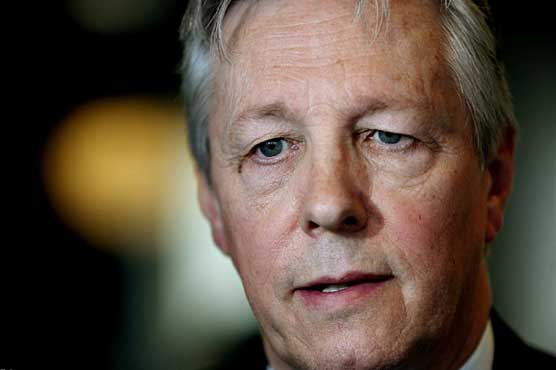
LONDON (AFP) - Democratic Unionist Party (DUP) leader Peter Robinson on Tuesday resumed his job as Northern Ireland First Minister after stepping down last month in a row about alleged Irish Republican Army (IRA) activity.
Ministers from his party who joined in the walkout also returned to the power-sharing executive following the publication of a government-ordered review of paramilitary activity in the province.
The review, conducted by police and British domestic security service MI5, found that the main republican and unionist groups including the IRA still existed despite the 1998 peace deal that ended some 30 years of sectarian violence known as The Troubles.
Although some paramilitaries have since committed murders, the report concluded that the groups leaders were committed to peace and their criminal activities did not spill over into terror.
The row centres on allegations that IRA members were involved in the murder of a former IRA militant, in a case that bore similarities to extra-judicial killings by the IRA during The Troubles.
The claims revived fears that the paramilitary group was still operating in secret.
Robinson on Tuesday warned that the issue had not yet been settled permanently, and that the power-sharing agreement was dependent on the outcome of talks.
"We really are only back for a couple of weeks while the talks process is concluded," he said.
"We are at the sparring stage still but I think today marks the beginning of intensive discussions."
The DUP pulled four of its five ministers out of the administration last month, while the Ulster Unionist Party (UUP) -- the other main pro-British party -- has also quit the coalition government.
Tuesday s report found that "the structures of Provisional IRA (PIRA) remain in existence" but that it was not actively recruiting or rearming.
"The PIRA of the Troubles era is well beyond recall," said the report.
"It is our firm assessment that PIRA s leadership remains committed to the peace process and its aim of achieving a united Ireland by political means," it added.