Summary Iran said Monday it collected samples at a military site and handed them to UN monitors.
TEHRAN (AFP) - Iran said Monday it recently collected samples at a military site where illicit nuclear work is alleged to have occurred and handed them to UN monitors who were not present.
The disclosure is likely to anger critics of the nuclear deal Iran struck with world powers in July, who have poured scorn on measures put in place to verify that the Islamic republic s atomic programme is peaceful.
It also drew a quick reaction from the UN s International Atomic Energy Agency (IAEA), whose chief said that "the integrity of the sampling process and the authenticity of the samples" was not compromised.
The samples, on which no details were given, were taken under "established procedures", IAEA director general Yukiya Amano said, noting that "significant progress" was being made in its long-running probe that Iran had sought to develop nuclear weapons in the past.
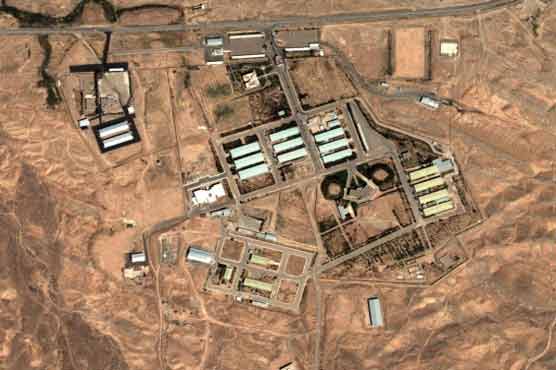
The site at Parchin, east of the capital Tehran, has been at the centre of international scepticism of Iran s activities, specifically that as late as 2003 it carried out work there aimed at building an atomic bomb.
Iran says accusations from Western intelligence agencies -- including that it carried out explosives tests at Parchin -- are groundless and based on malicious information provided by its enemies.
The sample taking is linked to a December 15 deadline under which the IAEA says "ambiguities" about past "possible military dimensions" of Iran s nuclear activities must be resolved.
The "environmental sampling from some specific parts within the Parchin complex" was conducted in the past week, according to the spokesman for Iran s Atomic Energy Organisation, Behrouz Kamalvandi.
"It was done by Iranian experts, in the absence of IAEA inspectors," Kamalvandi told state media, referring to the UN agency s staff.
IAEA and Iranian officials have previously said such procedures can be verified in real time by satellites and sophisticated geolocation monitoring technology.
Amano, speaking a day after he visited Iran and was unexpectedly granted access to Parchin, appeared to reiterate such remarks while acknowledging Iran s role.
"In the case of Parchin, the Iranian side played a part in the sample-taking process by swiping samples," Amano told reporters in Vienna.
"The agency can confirm the integrity of the sampling process and the authenticity of the samples, which were taken at places of interest to the agency at the particular location in Parchin."
He also said he and Tero Varjoranta, the IAEA s chief inspector, visited a building that had previously only been monitored by satellite technology, and indicated that it had been altered.
"Inside the building, we saw indications of recent renovation work. There was no equipment in the building," he said.
"Our experts will now analyse this information and we will have discussions with Iran in the coming weeks."
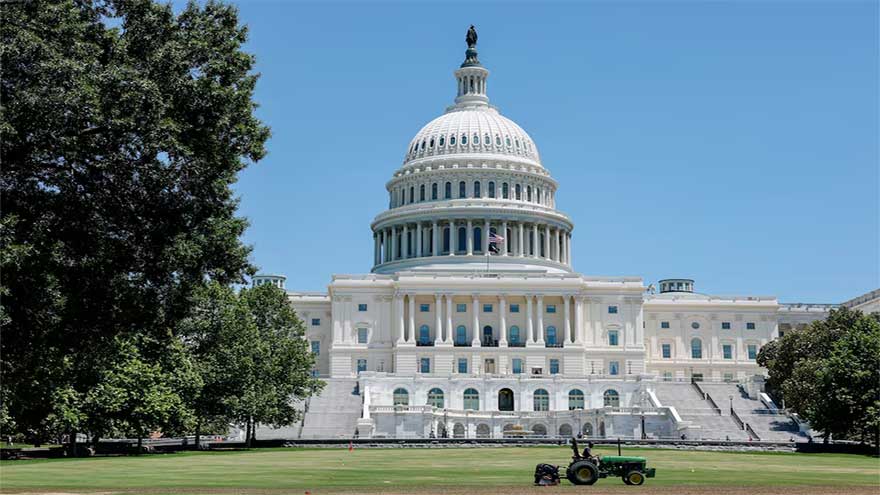
Reports that international inspectors would not be physically present during sampling were seized on recently by the nuclear deal s biggest opponents, including Republicans in the US Congress, who say Iran could cheat the IAEA s verification regime.
Under the July 14 nuclear deal between Iran and six world powers (Britain, China, France, Russia and the United States plus Germany) the IAEA must verify that Tehran s nuclear activities have no military aims.
Iran had previously refused permission to enter Parchin, highlighting its military function and stressing that the IAEA had already conducted inspections in 2005 there that yielded nothing.
The nuclear deal cannot go ahead until the accusations about the past possible military dimensions of Iran s nuclear programme are resolved.
Under that agreement Iran, in exchange for the lifting of crippling international sanctions, agreed to curbs on its nuclear activities that experts say would make any dash to produce a weapon all but impossible.
Iranian lawmakers are in the final stages of reviewing the text of the nuclear agreement. It is not clear if there will be a parliamentary vote.
Earlier this month in the United States, the Republican-led House of Representatives rejected the nuclear deal. But it was a purely symbolic vote as one day earlier the Senate cleared the way for the international accord to come into force.