Updated on
Summary
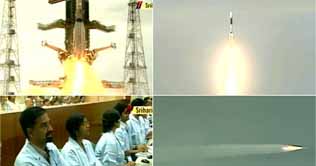
India's bid to launch an advanced communications satellite into orbit for the first time by using a cryogenic engine has failed. The rocket took off as planned but the phase powered by the new engine failed to perform and deviated from its path. Cryogenic engines are rocket motors designed for fuels that have to be held at very low temperatures to be liquid. They would otherwise be gas. Officials say that only five countries in the world have this technology. Indian Space Research Organisation (Isro) Chairman K Radhakrishnan said that an investigation would now be held to find out what exactly went wrong. Scientists say the mission failed because control of the two engines controlling the satellite was lost, resulting in loss of altitude and velocity. .Journalists at the scene of the launch said that scientists in the mission control area at Sriharikota in eastern India initially clapped and rejoiced after what appeared to be a successful launch - but their disappointment was apparent as the rocket deviated from its course. India began developing cryogenic technology after Russia reneged on a deal to supply cryogenic engines in 1993 - following pressure from the United States, which believed India was using the technology to power missiles. India hopes to emerge as a global player in the multi-billion dollar satellite launch market.