Summary The Security Council adopted Resolution 2149 in a vote called by Nigeria.
UNITED NATIONS (AFP) - The Security Council voted unanimously Thursday to send 12,000 UN peacekeepers to the Central African Republic, where violence between Christians and Muslims has triggered fears of genocide.
The resolution, submitted by France, will deploy up to 10,000 military personnel and 1,800 police to the former French colony, where sectarian violence has killed thousands in the last year.
The UN peacekeeping mission is scheduled to take over on September 15 from 2,000 French and 6,000 African Union soldiers already in place as humanitarian needs in CAR escalate.
The Security Council adopted Resolution 2149 in a vote called by Nigeria, which holds the body s rotating presidency.
The mandate of the UN Multidimensional Integrated Stabilization Mission in the Central African Republic (MINUSCA) is to protect civilians and humanitarian convoys, maintain order, support a political transition and promote human rights.
France hailed what its ambassador to the UN called a "key turning point" and urged the UN and African Union to "do everything possible to allow a swift and effective deployment."
"The security situation in CAR remains volatile," ambassador Gerard Araud told reporters after the vote.
"African Union troops supported by the French troops are doing tremendous work to protect the civilian population -- but it s just not yet enough."
- CAR on edge of disaster -
US ambassador Samantha Power, who just returned from the Central African Republic, said she could "personally attest to the critical urgency" of bringing more security there.
She said the country was on the "edge of disaster."
"AU troops have done heroic work... but untold horrors continue in small villages throughout the countryside," she said.
The United States has pledged $67 million in humanitarian aid for the Central African Republic this financial year, focused on health, protection, economic recovery, water and sanitation.
The United States will also work towards getting more African troops into CAR before September 15, to overcome a decline in numbers provoked by the departure of Chadian troops.
Chad announced last week it was withdrawing from the African peacekeeping force. Its troops faced repeated accusations of siding with Muslims in the sectarian violence.
The foreign minister of the Central African Republic thanked the Security Council and international community for its support, saying his government was "very happy" with the UN deployment.
The United Nations was the only partner who could help his country exit the crisis, Toussaint Kongo-Doudou said.
"The UN will create the necessary framework where all nationals, all the citizens of the Central African Republic will sit, discuss, talk to each other in order to find a lasting solution," he said.
- UN funding falling short -
Aid group Save the Children, which is working on the ground across Central African Republic, said the UN deployment "cannot come soon enough."
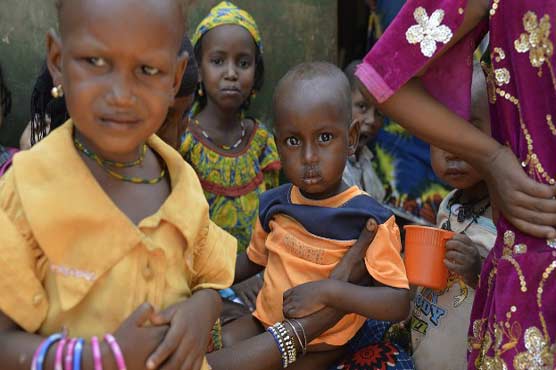
Its head of humanitarian policy and advocacy, George Graham, said 600,000 people were in internally displaced camps. Some 20,000 Muslims were besieged in enclaves, threatened by armed militias, while most other Muslim families have already fled over the borders.
"The humanitarian situation in CAR is dire and set to worsen once the rainy season begins in earnest at the end of this month," said Graham.
"It is vitally important that existing peacekeepers on the ground are properly funded to prevent the situation in CAR spiraling further out of control," he said.
A UN appeal for CAR was only 23 percent funded so far, he added.
The European Union has promised separately to send 800 troops in its first major ground operation in six years. They are expected to become fully operational by the end of May.
The initial contingent of 55 EU troops made their first patrols in the capital, Bangui, Wednesday.
A coup in March last year by the Muslim Seleka rebels plunged the country into chaos.
After seizing power, some of the rebels went rogue and embarked on a campaign of killing, raping and looting.
The abuses prompted members of the Christian majority to form vigilante groups called "anti-balaka," or anti-machete in the local Sango language, unleashing a wave of brutal tit-for-tat killings.