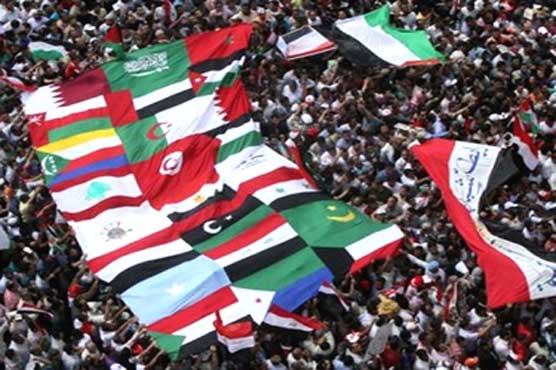
Summary The Arab world has been rocked by changes in few years.
NICOSIA (AFP) - Since December 2010, the Arab world has been rocked by changes that have toppled two Egyptian presidents, plunged Syria into civil war, sparked chaos in Libya and a difficult transition in Tunisia.
SYRIA
Since March 2011, peaceful protest in Syria has been transformed by a brutal crackdown under President Bashar al-Assad into all-out civil war.
More than 126,000 people have died, according to a Syrian non-governmental organisation, and the UN says millions of people have been displaced.
Assad s regime, with backing from the Lebanese Shiite militia Hezbollah and local militias, is fighting a disparate group of rebels comprised of army deserters, Syrian civilians and foreign jihadist fighters.
Most of the rebels are Sunni Muslims, while Assad s Alawite clan is an offshoot of the Shiite branch of Islam.
On August 21, 2013, a chemical weapons attack blamed on the regime despite its denials killed hundreds of people in rebel-held zones near Damascus.
In September, a Russian-US agreement on dismantling the Syrian government s arsenal of chemical weapons by mid-2014 averted US retaliatory strikes against Syria.
Assad s regime and rebels, each with substantial regional sponsors, have hardened their positions and show little inclination towards compromise ahead of a peace conference dubbed Geneva 2 that is to be held from January 22.
EGYPT
Former president Hosni Mubarak, who was in power for three decades, handed over to the army on February 11, 2011 after an 18-day general revolt that left almost 850 people dead.
On July 3, 2013, Islamist president Mohamed Morsi, Egypt s first freely-elected head of state, was ousted by armed forces led by General Abdel Fattah al-Sisi after a tumultuous year in office.
Since August 14, 2013, Egyptian security forces have cracked down on fresh protests, killing some 1,000 pro-Morsi militants and arresting more than 2,000 members of the Muslim Brotherhood organisation.
TUNISIA
Tunisia is where the "Arab Spring" began but it is still without a strong central government almost three years after the regime of Zine El Abidine Ben Ali fell on January 14, 2011.
Ben Ali had been in power since 1987, and he fled to Saudi Arabia to avoid capture by a movement that erupted when a young street merchant set himself ablaze in December 2010 to protest police harassment.
The election of a constituent assembly was won by Islamists from the Ennahda party in October 2011 and it began to govern under the leadership of Moncef Marzouki, an implacable opponent of Ben Ali.
Since then, Tunisia has been regularly hit by social unrest and political crises, the latest being the assassination in July 2013 of an opposition figure less than six months after another leftist leader was killed.
LIBYA
Since Moamer Kadhafi s regime collapsed in October 2011, transitional authorities in Libya have struggled to create a professional army and police force able to maintain order.
Officials rely on former rebel groups that have become armed militias willing to challenge the state when their interests are threatened.
BAHRAIN
A protest movement that erupted on February 14, 2011 was put down a month later, but this small Gulf kingdom is regularly the scene of unrest as a Shiite majority contests the ruling Sunni dynasty.
Protesters demand the creation of a constitutional monarchy, but the demonstrations often spark brutal repression by security forces.
YEMEN
Yemen faces an impasse in its efforts to establish a new constitution, under a UN- and Gulf-backed transition launched when president Ali Abdullah Saleh stepped down in February 2012 after a year of demonstrations.
The main sticking point is the south s demand for autonomy.