Summary Syria's government and opposition will meet for the first time on Jan. 22 in Geneva.
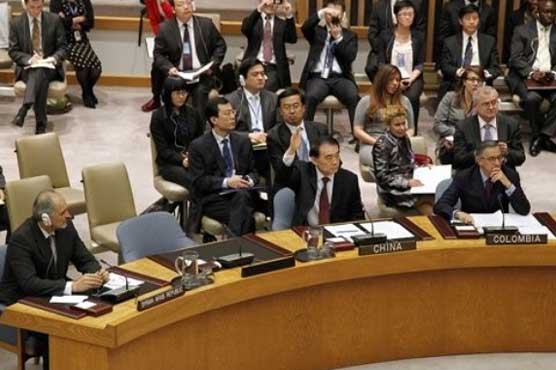
GENEVA (AP) - Syria s government and opposition will meet for the first time on Jan. 22 in Geneva, in an attempt to halt the nearly 3-year-old civil war that has killed more than 100,000 people, the United Nations announced Monday.
Previous attempts to bring the two sides together have failed, mainly because of disputes over who should represent the Syrian opposition and government, Syrian President Bashar Assad s future role in the country, and whether Iran, Saudi Arabia and other regional powers should be at the table.
U.N. Secretary-General Ban Ki-moon urged the government and opposition to help the conference succeed by taking steps to stop the violence, provide access for desperately needed humanitarian aid, release detainees, and help hundreds of thousands of refugees and internally displaced people return to their homes.
"We go with a clear understanding: The Geneva conference is the vehicle for a peaceful transition that fulfills the legitimate aspirations of all the Syrian people for freedom and dignity, and which guarantees safety and protection to all communities in Syria," he told reporters at U.N. headquarters.
He said a key goal of the conference would be the establishment of a transitional government with powers over military and security. A full list of participants has not yet been decided.
The U.N. did not specify who will be representing Syria s opposition at the talks, but Britain s foreign secretary said the main opposition group, the Syrian National Coalition, will participate. The group has limited control over the myriad rebel groups fighting Assad s forces.
Khaled Saleh, a spokesman for group, said it had not yet decided who it would send, but remained dead set against inviting Iran to the talks.
Iran, a staunch supporter of Assad, has given him significant financial support and is believed to have sent military advisers, trained pro-government militiamen and directed one of its proxies, Lebanon s Shiite Muslim Hezbollah group, to fight alongside Assad s troops.
"We want to have a successful conference, and we are not interested in a conference that is going to waste time; we are not interested in a conference that is going to justify killing more Syrians," he said.
"As of now, what I can say is Iran is not a party that s welcome given the current circumstances to attend the conference. If they change their positions, they start pulling out, and stop killing Syrians; we will start talking about them attending to the conference."
The Syrian Foreign Ministry said in a letter to Ban that ending support for the "armed terrorist groups" in Syria is "crucial for any political solution to the crisis in Syria to succeed and to give such a political process credibility in the eyes of the Syrian people." Contents of the letter were broadcast on Syrian TV on Monday.
The U.N. s goal is based on the roadmap for a Syrian political transition adopted by the U.S., Russia and other major powers at a Geneva conference on Syria in June 2012, to which the warring sides were not invited.
The roadmap envisioned the establishment of a transitional governing body with full executive powers agreed to by both sides, and ending with elections. But there has been no agreement on how to implement it. One of the biggest sticking points has been the future role of Assad.