Summary Iranian chief negotiator said he doubted that Tehran and the world powers could reach an accord.
GENEVA (AFP) - Foreign ministers from world powers struggled Saturday to nail down a landmark nuclear deal with Iran, with US Secretary of State John Kerry announcing his imminent departure and Iran s chief negotiator downbeat.
As talks in Geneva went late into an unscheduled fourth day, Kerry s spokesman said Washington s top diplomat would be flying to London on Sunday morning -- presumably with or without a deal.
Iranian chief negotiator Abbas Araqchi said he doubted that Tehran and the P5+1 world powers -- the United States, Britain, France, China, Russia and Germany -- could reach an accord by the end of Saturday.
"Intense and difficult negotiations are under way and it is not clear whether we can reach an agreement tonight," Fars news agency quoted Araqchi as saying.
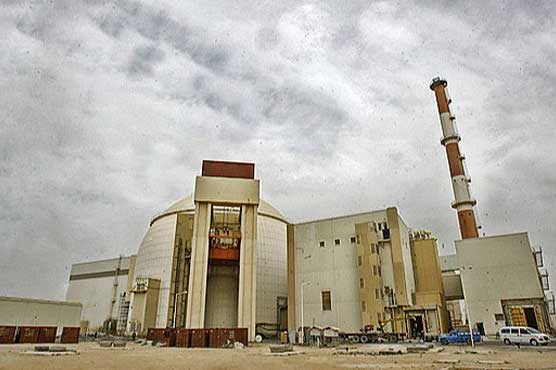
The talks, mostly between Iranian Foreign Minister Mohammad Javad Zarif and P5+1 chief negotiator Catherine Ashton, are aimed at securing a freeze on parts of Iran s nuclear programme in return for limited sanctions relief.
The arrival of Kerry and other P5+1 foreign ministers late Friday and on Saturday had raised hopes, after three long days of intense negotiations among lower-level officials, that a breakthrough was in sight.
However the talks continued to drag on inside the smart Geneva hotel late Saturday.
"We have now entered a very difficult stage," Zarif told state television.
He insisted he would not bow to "excessive demands", without detailing the obstacles.
British Foreign Secretary William Hague said on his arrival that the talks "remain very difficult" and that "we are not here because things are necessarily finished".
Late on Saturday, Kerry went into a three-way meeting with Ashton and Zarif for the second time, a US official said following a meeting among the powers foreign ministers.
Two weeks ago, the ministers had jetted in seeking to sign on the dotted line, only to fail as cracks appeared among the P5+1 nations -- fissures that officials say are now repaired.
But a second fruitless effort in Geneva in as many weeks would not only be an diplomatically embarrassing.
If there is no deal, or at least an agreement to meet again soon and keep the diplomatic momentum going, the standoff could enter a new, potentially dangerous phase.
Since being elected in June, Iranian President Hassan Rouhani has raised big hopes that, after a decade of rising tensions over Tehran s nuclear programme, a solution might be within reach.
But if his diplomatic push fails to bear fruit, Tehran could resume its expansion of nuclear activities, leading to ever more painful sanctions -- and possible military action by Israeli or the United States.
Mark Hibbs, an analyst from the Carnegie Endowment for International Peace, said Kerry s imminent departure might not necessarily be a bad sign, however.
Kerry leaving "might set a deadline and focus people s minds, especially if things this afternoon are bogging down in the details," Hibbs told AFP.