Summary Uhuru is unlikely to attend his trial at International Criminal Court over crimes against humanity.
NAIROBI (AP) - In the aftermath of the attack on a Nairobi shopping mall, Kenya s president appears increasingly unlikely to attend his trial at the International Criminal Court where he is charged with crimes against humanity.
Even as heads of state prepare to gather for an African Union summit Saturday, where they could debate the possible exit of some African countries from the International Criminal Court, Kenyan officials are warning that President Uhuru Kenyatta might not show up in The Hague next month for his trial.
"He has cooperated fully with the court up until now," Foreign Minister Amina Mohamed told a news conference Wednesday held in front of the president s downtown Nairobi office. She was referring to past ICC hearings before Kenya s presidential election in March.
Mohamed underscored the contrast between then when Kenyatta was a businessman and a presidential candidate and now, when he is president of East Africa s most powerful country, which faces a rising threat posed by Islamic insurgents.
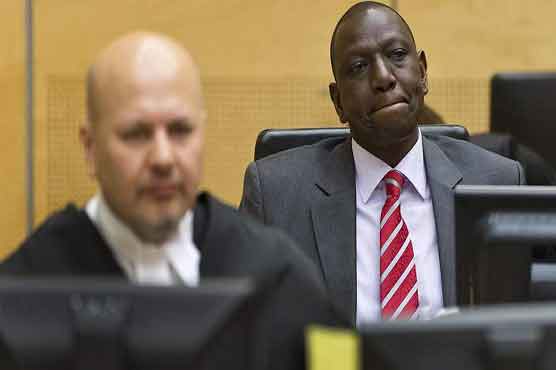
The ICC charges against Kenyatta and Deputy President William Ruto relate to Kenya s 2007-08 post-election violence that killed more than 1,000 people. Kenyatta has asked the court if he can attend the trial by video link. Judges have not yet ruled and have rejected that request from Ruto.
Herman von Hebel, an ICC executive, told reporters in The Hague on Wednesday that Kenyan authorities have so far fully cooperated with the case and he has not yet seen "any concrete element" to indicate that will change.
Privately, several members of Kenya s government have told The Associated Press they do not believe Kenyatta will report to The Hague. One official said tribal elders are urging Ruto not to return after finishing his current court session. All officials insisted on anonymity to speak freely about internal government deliberations.
Before this year s election, US officials obliquely warned Kenyans that it wouldn t be a good idea to elect Kenyatta, the son of modern Kenya s founding father, as their president because of the charges hanging over him. Washington s assistant secretary of state for Africa said "choices have consequences."
Before this year s election, the top US official for Africa obliquely warned Kenyans that it wouldn t be a good idea to elect Kenyatta as their president because of the ICC charges, saying "choices have consequences."
But the Sept. 21 mall attack has increased Kenya s and Kenyatta s value to the West in the war against terror. The Somali Islamic group al-Shabab claimed responsibility for the assault and said it was in retaliation for Kenya s sending of troops into neighboring Somalia.
If he decides not to attend the ICC trial, Kenya could become politically isolated and be sanctioned. But after the mall attack that killed more than 60 people, international repercussions may be lighter.
Officials at the U.S. Embassy refused to comment on the developments and the possibility that Kenyatta may snub the court.
At the African Union summit in Ethiopia s capital, African leaders could recommend a deferral of Kenyatta s case, or even seek to rebuke the court or sever the continent s relationship with it. Kenya s parliament in a non-binding vote last month voted to pull out of the Rome Statue, the legal mechanism that created the ICC.
The ICC faces a perception that it singles out Africans for prosecution even though many of the cases before the ICC were self-referred, said David M. Crane, a professor at Syracuse University College of Law.
The United States, which is not a party to the Rome Statute, says it supports the goals of the ICC and believes in promoting justice and ending impunity.
More than 1,000 people were killed in Kenya s post-election violence six years ago. Kenyan courts have prosecuted less than a half dozen people.