Summary Inspectors say there was clear evidence sarin that killed hundreds of people on August 21.
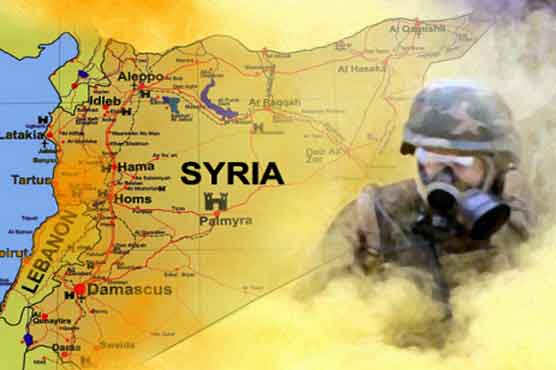
UNITED NATIONS (AFP) - UN inspectors on Monday reported widespread use of chemical weapons in Syria as Britain, France and the United States launched a push for a tough Security Council resolution on the issue.
The keenly-awaited inspectors report stated that there was clear evidence sarin killed hundreds of people in an August 21 attack that triggered threats of western military strikes against Bashar al-Assad s regime.
"The conclusion is that chemical weapons have been used in the ongoing conflict between the parties in the Syrian Arab Republic against civilians, including children, on a relatively large scale," said the report, which was to be released later by UN leader Ban Ki-moon.
The report said there was "clear and convincing" evidence of the use of sarin gas in the August 21 attack and that surface-to-surface rockets containing the nerve agent were used to deliver it.
The detail was in the first page of the report which was inadvertently leaked when it was included in an official picture of UN investigation leader Ake Sellstrom handing over the report to UN leader Ban Ki-moon.
Ban was to give the full report to the UN Security Council on Monday.
The United States, Britain and France blame Assad s forces for the attack and say it killed more than 1,400 people. The government, backed by Russia, denies the charge and blames opposition rebels.
The details of the report s contents emerged as the western allies, meeting in Paris, warned Syria of "serious consequences" if it stalls on handing over its chemical weapons.
Kickstarting a week of intense diplomatic activity in the wake of a weekend US-Russia deal on the proposed disarmament, the three powers also moved to bolster rebels fighting Assad s regime and reiterated calls for the Syrian president to step down.
The tough tone triggered an immediate warning from Russia that western sabre-rattling could derail efforts to bring the regime and rebels to the table for negotiations aimed at ending a civil war that has raged for over two years and left more than 110,000 people dead.
US Secretary of State John Kerry said it was vital that the allies, who came to the brink of launching air strikes against Assad earlier this month, maintain the pressure on the regime.
"If Assad fails to comply with the terms of this framework make no mistake we are all agreed, and that includes Russia, that there will be consequences," Kerry said.
"If the Assad regime believes that this is not enforceable and we are not serious, they will play games."
British Foreign Minister William Hague added: "The pressure is on them (the Syrians) to comply with this agreement in full. The world must be prepared to hold them to account if they don t."
The Paris talks came ahead of the publication later on Monday of the keenly awaited report by UN inspectors.
The United States and Russia agreed in Geneva on Saturday that an ambitious accord aimed at eliminating Syria s chemical weapons by mid-2014 be enshrined in a Security Council resolution backed up by the threat of unspecified sanctions in the event of non-compliance.
Russia has made it clear it will block any move to write an explicit authorization for the use of military force into the resolution.
Lavrov said that kind of approach would scupper hopes of a resumption of suspended peace negotiations in Geneva.
"If for someone it is more important to constantly threaten... that is another path to wrecking completely the chances of calling the Geneva-2 conference," Lavrov told journalists in Moscow.