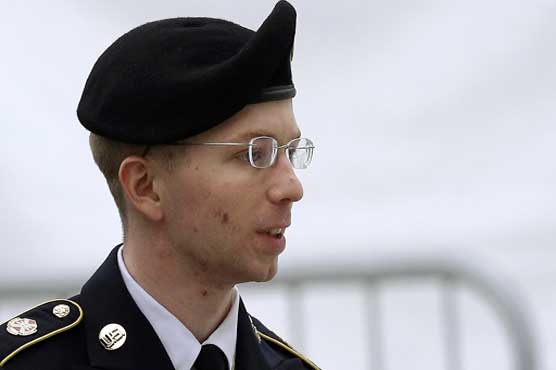
Summary U.S. soldier apologized for hurting his country by giving classified information to WikiLeaks.
FORT MEADE (AP) - Army prosecutors get one more chance Friday to present evidence that U.S. soldier Bradley Manning's sentencing hearing that he deserves a long prison sentence for disclosing a trove of classified information.
The government may call witnesses to rebut testimony the defense presented, including testimony from two mental health workers that Manning's inner turmoil over his gender identity and his sense of isolation contributed to his decision to send secrets to WikiLeaks.
Manning has taken the stand at the hearing and apologized for hurting his country by giving classified information to WikiLeaks and pleaded with a judge for a chance to go to college and become a productive citizen.
The 25-year-old addressed the court Wednesday after a day of testimony about his troubled childhood and the extreme psychological pressure that experts said he felt in the "hyper-masculine" military because of his gender-identity disorder
his feeling that he was a woman trapped in a man's body. One psychiatrist said Manning has symptoms of fetal alcohol syndrome and Asperger syndrome, which is an autism spectrum disorder.
"I am sorry that my actions hurt people. I'm sorry that they hurt the United States," Manning said.
The soldier said he understood what he was doing but that he did not believe at the time that leaking the classified information to the anti-secrecy website would cause harm to the U.S. The release of diplomatic cables, warzone logs and videos was the largest leak of documents in U.S. history.
Manning could be sentenced to 90 years in prison for the leaks, which occurred while he was working as an Army intelligence analyst in Iraq in 2010. The next court session, for any prosecution rebuttal testimony, is set for Friday.
Manning appeared to struggle to contain his emotions several times during testimony from his sister, an aunt and two mental health counselors, one who treated him and another who diagnosed him with several problems.
His conciliatory tone was at odds with the statement he gave in court in February, when he condemned the actions of U.S. soldiers overseas and what he called the military's "bloodlust."
Manning's apology could carry substantial weight with the military judge, said Eugene Fidell, who teaches military justice at Yale.
WikiLeaks founder Julian Assange said he believed the apology was forced.
"It took three years and millions of dollars to extract two minutes of tactical remorse from this brave soldier," Assange said in a statement.
Manning's attorneys contend he showed clear signs of deteriorating mental health that should have prevented commanders from sending him to a war zone to handle classified information.
Manning eventually came out to Capt. Michael Worsley, emailing the therapist a photo of himself in a long, blond wig and lipstick. The photo was attached to a letter in which Manning described his trouble and his hope that a military career would "get rid of it."
Worsley testified Wednesday that the soldier was struggling under extreme conditions.
"You put him in that kind of hyper-masculine environment, if you will, with little support and few coping skills, the pressure would have been difficult to say the least," Worsley said. "It would have been incredible."