Summary Thousands took to the streets in a determined push for return to power of Egypt's ousted leader.
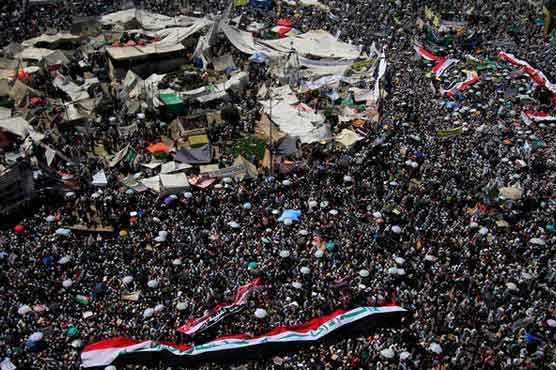
CAIRO (AP) - With the military beefing up security, tens of thousands took to the streets Friday in a determined push for the return to power of Egypt s ousted Islamist leader, while Mohammed Morsi s opponents staged rival rallies, raising fears of a fresh round of clashes.
In the only reported deadly violence Friday, angry residents of the delta city of Mansoura clashed with pro-Morsi protesters. Gunshots and birdshots were fired, though it was unclear by whom, security officials said.
The officials, who spoke on condition of anonymity because they were not authorized to speak to the media, said a 25-year-old woman and a young girl were killed in the late night violence.
A local rights activist who was at the hospital, Abdullah el-Nekeity, said three women were killed, including a 17-year-old girl, and 13 other people were injured.
El-Nekeity said a mob attacked the pro-Morsi demonstrators with dogs, gunfire birdshots and knives. The marchers fled, some hiding in residences until the police arrived, el-Nekeity said.
A statement from Morsi s Muslim Brotherhood party said those killed were supporters of the ousted government and blamed hired thugs for shooting them.
The army warned it wouldn t tolerate any violence and sent fighter jets screaming over the capital and helicopters hovering over the marches.
Publicizing their protests for days, Morsi s supporters vowed Friday would be decisive in their campaign to try to reverse the military coup that removed the country s first democratically elected president after a year in office, following massive protests against him.
Unlike other demonstrations held in the evening after breaking the daylong Ramadan fast, the pro-Morsi rallies took place throughout the day.
Organized by the Muslim Brotherhood party and dubbed "Breaking the Coup," they included marches in Cairo s streets, outside military installations and in other cities, including Alexandria and several Nile Delta provinces.
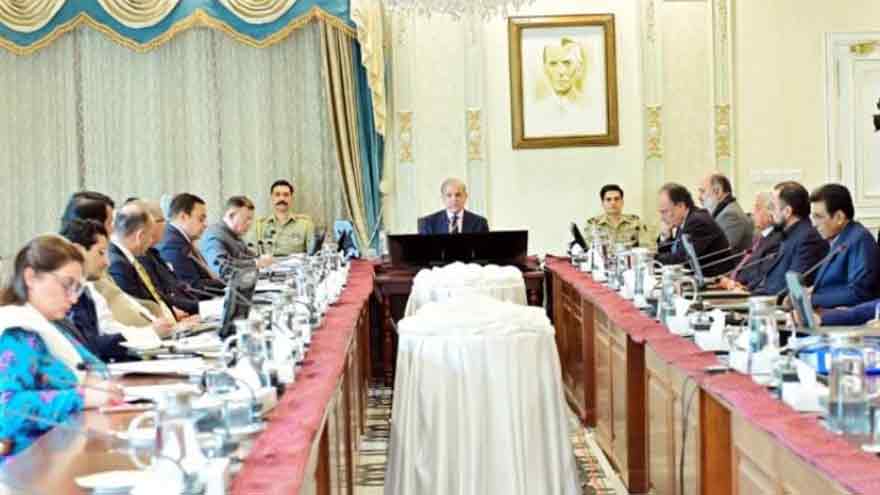
The rival gatherings came just days after a new interim Cabinet was sworn in that includes women, Christians and members of a liberal coalition opposed to Morsi, but no Islamists. The Muslim Brotherhood has refused to take part in talks with the interim leadership.
The country has been deeply polarized since the ouster of longtime autocrat Hosni Mubarak in February 2011, following massive rallies. The divisions only deepened over the July 3 military coup supported by millions who accused Morsi of abusing his power and giving too much influence to his Muslim Brotherhood group.
Friday s rallies coincided with the 10th day of the Muslim fasting month of Ramadan, which Egyptians celebrate as the day their armed forces crossed the Suez Canal in the 1973 war with Israel. The surprise assault led to the return of the Sinai Peninsula, which had been occupied by Israel.
The occasion was a chance for the rival camps to focus on the military, which was instrumental in removing Morsi. At pro-Morsi gatherings, protesters extolled the virtue of the armed forces but drew a distinction with its leadership, which they accused of treason for turning against Morsi.
Waving Egyptian flags and pictures of the ousted leader, they chanted slogans against army chief Gen. Abdel-Fatah el-Sissi. "El-Sissi is a traitor!" they shouted. "Morsi is our president!"
Organizers played Morsi s old speeches, referring to him as the nation s leader and the supreme commander of the armed forces.
"The problems of the first years could have been solved by dialogue, but the opposition always refused," said 28-year-old Osama Youssef, who traveled to Cairo from the eastern province of Sharqiya to show his support for Morsi. "The opposition didn t succeed in getting power through constitutional measures, so it chose to take power by staging a military coup."
Sayed el-Banna, a 45-year-old Brotherhood member who came to Cairo from the Delta province of al-Sharqia, said it was important to have many people in the streets.
"It is to send a message to those in the army who disagree with el-Sissi to stand with us and support us," he said.
Meanwhile, several thousand anti-Morsi protesters gathered in Cairo s Tahrir Square and outside two presidential palaces to celebrate their gains.
"The people and the army and the police together against terrorism," declared a banner stung across a stage set up at the presidential palace.
Army choppers flying overhead dropped gift coupons and Egyptian flags on the gathering in Tahrir Square and a police choir performed nationalist songs in a party that lasted late into the night.
The presence in the streets of the rival sides had raised fears of clashes, and military and police were deployed heavily in areas where the two crowds might collide. In one incident, near the presidential palace, security forces lobbed tear gas at an approaching march by Morsi supporters to prevent it from reaching an area where anti-Morsi demonstrators were holding their own rally.
Only minor incidents of violence were reported in the capital. Pro-Morsi supporters and opponents shouted at one another after Friday prayers in the main Al-Azhar Mosque and police detained six Islamist protesters for throwing rocks. Separately, a man was stabbed and hospitalized when a crowd of the deposed president s supporters questioned his identity and found out he was a policeman in civilian clothing.