Summary Machete-wielding protesters went on rampage over conviction of an Islamist leader for war crimes.
DHAKA (AFP) - Police fired on Islamist demonstrators in southwestern Bangladesh on Tuesday, killing two as machete-wielding protesters went on the rampage over the conviction of a senior Islamist leader for war crimes.
Several thousand supporters of the country s largest Islamic party Jamaat-e-Islami took to the streets in Satkhira district, attacking police with sticks and machetes and throwing homemade bombs, officers said.
Jamaat supporters set upon one officer as police tried to clear a road blocked by fallen trees in the town of Kaliganj. "They hacked him (the officer) with a machete. We opened fire at them to rescue the officer. Two Jamaat activists were hit by bullets and they died," district deputy police chief Tajul Islam said, adding that eight other police officers were injured.
Islamists and secular groups called rival strikes over the conviction and sentence of 90-year-old Ghulam Azam, the spiritual leader of Jamaat, for masterminding atrocities during the 1971 war of independence against Pakistan. The war crimes tribunal sentenced Azam, whom prosecutors compared to Nazi leader Adolf Hitler, to 90 years in prison on Monday on five charges of planning, conspiracy, incitement, complicity and murder during the war.
Jamaat, a key member of the opposition, says the trials are aimed at eliminating its leaders. But secular groups say Azam should have been hanged.
Earlier verdicts against Jamaat activists, including three death sentences, plunged the country into its worst political violence since independence. At least 150 have been killed in clashes with police and paramilitary forces since the first sentence was passed in January.
Azam was the fifth Islamist and the fourth Jamaat official convicted by the controversial court set up by the secular government. Azam, the wartime head of Jamaat, was spared the death penalty because of his age and health.
Prosecutors had sought execution, describing Azam as a "lighthouse" who guided all war criminals and the "architect" of the militias who committed most of the wartime atrocities.
When India intervened at the end of the nine-month war and it became clear Pakistan was losing, the militias killed dozens of professors, playwrights, filmmakers, doctors and journalists.
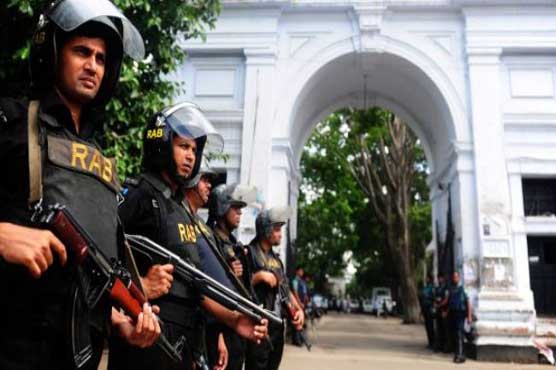
Businesses and shops were shut nationwide for the two-day strike which started on Monday, while roads and highways were largely empty, bringing inter-district transport to a halt. Security was tight in the capital Dhaka, with thousands of police patrolling the streets. Inspector Korban Ali said nine officers were injured during the violent protests in Satkhira district.
Tuesday s deaths bring the total number of people who have died in violence surrounding Azam s conviction to five. Protests erupted even before the verdict was announced on Monday, with at least three people killed, including two protesters who were shot dead by police in the northwestern town of Shibganj. The opposition has criticised the war crimes cases as politically motivated and aimed at settling old scores rather than meting out justice.
Unlike other war crimes courts, the Bangladesh tribunal is not endorsed by the United Nations. The New York-based Human Rights Watch group has said its procedures fall short of international standards.
The government maintains the trials are needed to heal the wounds of the 1971 war in which it says three million died. Independent estimates put the death toll at between 300,000 and 500,000.