Summary At least 95 people were killed in more than a dozen car bombings across Iraq on Monday.
BAGHDAD (AP) - A wave of attacks killed at least 95 people in Shiite and Sunni areas of Iraq on Monday, officials said, pushing the death toll over the past week to more than 240 and extending one of the most sustained bouts of sectarian violence the country has seen in years.
The bloodshed is still far shy of the pace, scale and brutality of the dark days of 2006-2007, when Sunni and Shiite militias carried out retaliatory attacks against each other in a cycle of violence that left the country awash in blood. Still, Monday s attacks, some of which hit markets and crowded bus stops during the morning rush hour, have heightened fears that the country could be turning back down the path toward civil war.
Sectarian tensions have been worsening since Iraq s minority Sunnis began protesting what they say is mistreatment at the hands of the Shiite-led government. The mass demonstrations, which began in December, have largely been peaceful, but the number of attacks rose sharply after a deadly security crackdown on a Sunni protest camp in northern Iraq on April 23.
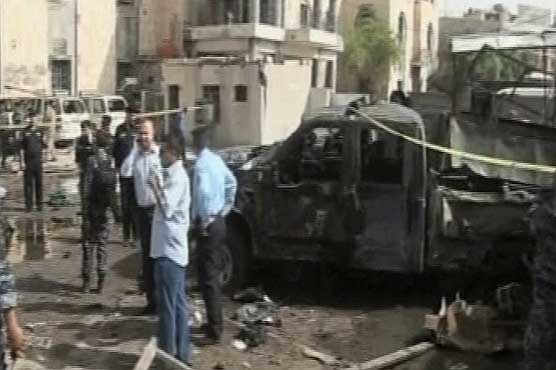
The worst of Monday s violence took place in Baghdad, where 10 car bombs ripped through open-air markets and other areas of Shiite neighborhoods, killing at least 48 people and wounding more than 150, police officials said. In the bloodiest attack, a parked car bomb blew up in a busy market in the northern Shiite neighborhood of Shaab, killing 14 and wounding 24, police and health officials said.
The surge in bloodshed has exasperated Iraqis, who have lived for years with the fear and uncertainty bred of random violence.
The predominantly Shiite city of Basra in southern Iraq was also hit Monday, with two car bombs there one outside a restaurant and another at the city s main bus station killing at least 13 and wounded 40, according to provincial police spokesman Col. Abdul-Karim al-Zaidi and the head of city s health directorate, Riadh Abdul-Amir.
A parked car bomb later struck Shiite worshippers as they were leaving a mosque in the southern city of Hillah, killing nine and wounding 26, according to police and health officials said.
In the town of Balad, about 80 kilometers (50 miles) north of Baghdad, a car bomb exploded next to a bus carrying Iranian pilgrims, killing 13 Iranians and one Iraqi, a police officer said on condition of anonymity because he was not authorized to brief the media.
There was no immediate claim of responsibility for the attacks, but the fact that they all occurred in Shiite areas raised the suspicion that Sunni militants were involved. Also, Sunni insurgents, particularly al-Qaida in Iraq, are known to employ such large-scale bombings.
Monday s violence also struck Sunni areas, hitting the city of Samarra north of Baghdad and the western province of Anbar, a Sunni stronghold and the birthplace of the protest movement.
A parked car bomb in Samarra went off near a gathering of pro-government Sunni militia who were waiting outside a military base to receive salaries, killing three and wounding 13, while in Anbar gunmen ambushed two police patrols near the town of Haditha, killing eight policemen, police and army officials said.
Also in Anbar, authorities found 13 bodies dumped in a remote desert area, officials said. The bodies, which included eight policemen who were kidnapped by gunmen on Friday, had been killed with a gunshot to the head.
The officials spoke on condition of anonymity because they were not authorized to talk to the media.