Summary Iran insists it has a right to enrich but says it has no interest to make weapons.
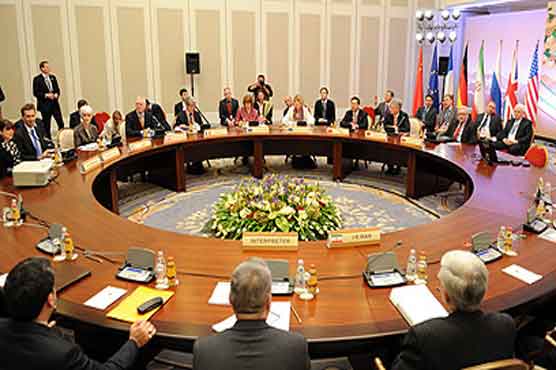
ALMATY, Kazakhstan (AP) - The EU s foreign policy chief says that nuclear talks between Iran and six world powers have failed to reach an agreement.
Catherine Ashton said Saturday that the talks revealed that "the two sides remain far apart on substance." "What matters in the end is substance, and ... we are still a considerable distance apart," Ashton said at the end of the two day talks.
The six insist Iran cut back on its highest grade uranium enrichment production and stockpile, fearing Tehran will divert it from making nuclear fuel to form the material used in the core of nuclear warhead.
Iran insists it has a right to enrich but says it has no interest to use the technology to make weapons. It wants more sanctions relief than the six are offering for any concessions on its part.
The positions of world powers and Iran remain "far apart" in talks seeking to end the standoff over Tehran s nuclear programme, EU foreign policy chief Catherine Ashton said after the latest meeting wrapped up in Almaty on Saturday.
"It became clear that the positions (of the world powers) and Iran remain far apart on the substance," Ashton told reporters at a news conference.
Russian Deputy Foreign Minister Sergei Ryabkov said the two sides had failed to find "mutual understanding", and a time and place for the next talks remained to be agreed, in comments quoted by Russian news agencies.
Ashton confirmed that the two sides had yet to agree on a date and locations of the next meeting between Iran and the five permanent UN Security Council members and Germany that are collectively known as the P5+1.
"We have therefore agreed that all sides will go back to (their) capitals to evaluate where we stand in the process," Ashton said. "I will be in touch with (chief Iranian negotiator Saeed) Jalili in order to see how to go forward."
Ashton said the two sides had "long and intensive discussions" over two days of meetings in the Kazakh city of Almaty. But she added that while discussing the substance of the proposals on the table, the sides still failed to get fully "engaged".
"I think the first hurdle is take the proposal that we put on the table and get a real response to all of it," Ashton said. "It s pretty obvious what we want to achieve in the end and we have very often spelled that out. The challenge is to get real engagement so that we can move forward with this."