Summary South Korea's defense minister has said that North Korea has moved a missile to its east coast.
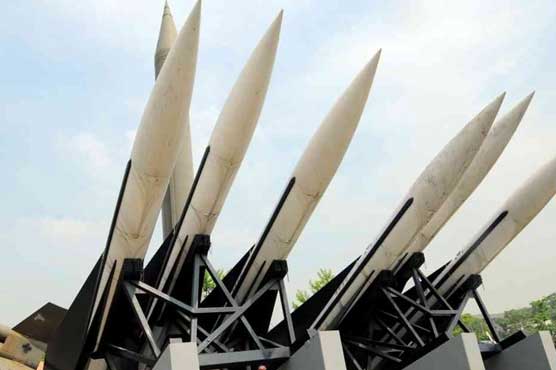
SEOUL (AFP) - North Korea has moved a medium-range missile to its east coast, South Korea said Thursday as the United States strengthened its Pacific missile defences amid intensifying threats from Pyongyang.
Seoul s defence minister Kim Kwan-Jin said the missile could reach a "considerable distance" but not the US mainland.
"It could be aimed at test-firing or military drills," he told lawmakers.
North Korea, incensed at fresh UN sanctions and South Korea-US military drills, has issued a series of apocalyptic threats of nuclear war in recent weeks.
Early Thursday its military said it had received final approval for military action against the United States, possibly involving nuclear weapons.
"The moment of explosion is approaching fast," the general staff said, responding to what it called the provocative US use of nuclear-capable B-52 and B-2 stealth bombers in war games with South Korea.
The US aggression would be "smashed by... cutting-edge smaller, lighter and diversified nuclear strike means," it said in a statement.
United Nations Secretary General Ban Ki-moon told North Korea on Thursday to rein in its threats, warning that any miscalculation could lead to an extremely grave outcome.
He told a news conference in Madrid that daily security and humanitarian reports from Pyongyang were "really alarming and troubling".
"Nuclear threat is not a game, it is very serious," Ban told reporters.
"I think they have gone too far in their rhetoric and I am concerned that if by any misjudgement, by any miscalculations... this will have very serious implications," he said.
US Defense Secretary Chuck Hagel said Pyongyang s increasingly bellicose threats combined with its military capabilities represented a "real and clear danger" to the United States and its allies South Korea and Japan.
The Pentagon said it would send ground-based THAAD missile-interceptor batteries to protect bases on Guam, a US territory some 3,380 kilometres (2,100 miles) southeast of North Korea and home to 6,000 American military personnel.
"They have nuclear capacity now, they have missile delivery capacity now," Hagel said Wednesday. "We take those threats seriously."
Intelligence analysis quoted by South Korea s Yonhap news agency said the east coast missile was believed to be a Musudan which has an estimated range of around 3,000 kilometres or more.
Yonhap quoted sources as saying Pyongyang is likely to fire it around the middle of April, when North Koreans celebrate the birthday of their late founder Kim Il-Sung.
A provocative missile test-fired into the sea over Japan is one scenario that analysts have said the North could choose to exit the crisis with a face-saving show of force.