Summary The US believes the Iranian shipments are aiding Syrian President Bashar Assad.
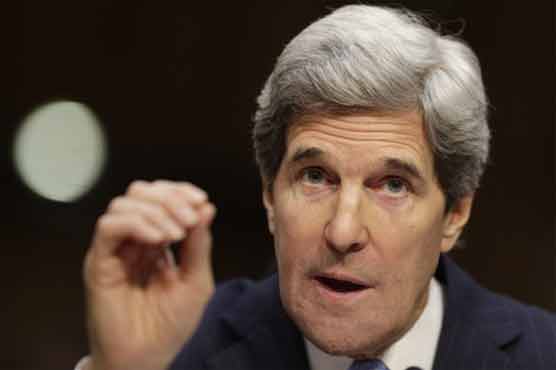
BAGHDAD (AP) - The US has made clear that Iraq shouldn t allow Iran to use its airspace to ship weapons and fighters to Syria, US Secretary of State John Kerry told reporters Sunday during an unannounced trip to Baghdad.
Following private discussions with Iraqi Prime Minister Nouri al-Maliki, Kerry said the two had a "very spirited discussion" on the subject of Iranian overflights. The US believes the Iranian shipments are aiding Syrian President Bashar Assad and undermining Western-backed opposition groups.
"I made it very clear that for those of us who are engaged in an effort to see President Assad step down ... anything that supports President Assad is problematic," Kerry said.
Kerry also said that US lawmakers and the American people are "increasingly watching what Iraq is doing and wondering how it is a partner."
In the absence of a complete ban on flights, the US would at least like the planes to land and be inspected in Iraq to ensure that they are carrying humanitarian supplies.
Former Secretary of State Hillary Rodham Clinton secured a pledge from Iraq to inspect the flights last year, but since then only two aircraft have been checked by Iraqi authorities, according to U.S. officials.
The overflights have long been a source of contention between the U.S. and Iraq and Kerry will tell the Iraqis that allowing them to continue will make the situation in Syria worse and ultimately threaten Iraq s stability.
One senior US official said the sheer number of overflights, which occur "close to daily," along with shipments trucked to Syria from Iran through Iraq, was inconsistent with claims they are only carrying humanitarian supplies.
The official said it was in Iraq s interest to prevent the situation in Syria from deteriorating further, particularly as there are fears that al-Qaida-linked extremists may gain a foothold in the country as the Assad regime falters.
The official, who spoke on condition of anonymity because she was not authorized to publicly preview Kerry s meetings, said there are clear links between al-Qaida linked extremists operating in Syria and militants who are also carrying out terrorist attacks in Iraqi territory with increasing regularity.
A group of fighters in Syria known as Jabhat al-Nusra, a powerful offshoot of al-Qaida in Iraq that the US has designated a terrorist organization, has claimed responsibility for most of the deadliest suicide bombings against regime and military facilities and, as a result, has gained popularity among some rebels.
Kerry will tell al-Maliki, a Shiite with close ties to Iran, that Iraq cannot be part of the political discussion about Syria s future until it clamps down on the Iranian shipments, the senior official said.
As Iraq approaches provincial elections next month, Kerry will also stress the importance of ensuring that all elements of society feel enfranchised, the official said. A recent decision to delay the polls in Anbar and Nineveh provinces is a "serious setback" to Iraq s democratic institutions and should be revisited, the official said.
In addition to al-Maliki, Kerry saw Iraqi parliament speaker parliament speaker Osama al-Nujaifi, a Sunni, whose faction is at odds with Maliki s Shiia.
Kerry also spoke by phone with Massoud Barzani, the head of the Kurdish Regional Government based in Irbil to encourage the Kurds not go ahead with unilateral actions - especially involving oil, like a pipeline deal with Turkey.
He will stress the "importance of maintaining the unity of Iraq," say that "separate efforts undercut the unity of the country" and that "the Kurdish republic cannot survive financially without the support of Baghdad," the official said.
Kerry s arrival came just three days after the anniversary of the U.S.-led war that began on March 20, 2003, with an airstrike on Dora Farms in southern Baghdad in a failed attempt to kill Hussein.
The invasion and toppling of Hussein sparked years of bloodshed as Sunni and Shiite militants battled U.S. forces and each other, leaving nearly 4,500 US soldiers and more than 100,000 Iraqis dead.
Violence has ebbed sharply since the peak of Sunni-Shiite fighting that pushed the country to the brink of civil war in 2006 and 2007. But insurgents are still able to stage high-profile attacks, and sectarian and ethnic rivalries remain threats to the country s long-term stability.