Summary Italy's centre-left was poised to win against Silvio Berlusconi in a key election for the eurozone.
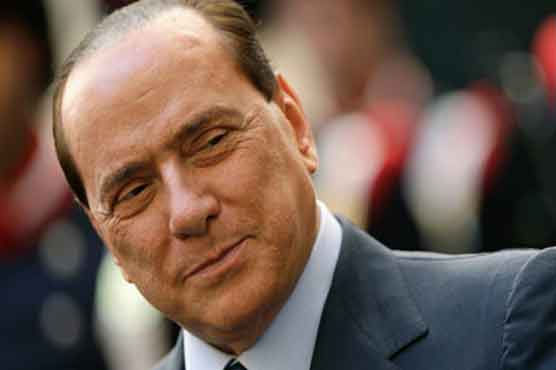
ROME (AFP) - Italy s centre-left was poised to win against Silvio Berlusconi on Monday in a key election for the eurozone, but a new anti-austerity party was also set to make major gains, exit polls showed.
The main Democratic Party led by Pier Luigi Bersani and its smaller leftist allies were ahead with between 34.5 and 37 percent, beating the 29 to 31 percent for a coalition led by the scandal-tainted former prime minister Berlusconi.
A projection by the SkyTG24 news channel said the left would manage to win a majority in both chambers of parliament, following fears that it would fail to snag a majority in the upper house Senate.
The newcomer Five Star Movement led by former-comedian-turned-activist Beppe Grillo, who has channelled growing disenchantment with traditional politicians and rising social discontent, was given around 20 percent in the exit polls.
European capitals and the financial markets have been concerned that no clear winner would emerge and stocks in Milan jumped by more than 3.5 percent immediately after the exit polls were released.
A lacklustre turnout however reflected widespread frustration among voters fed up with austerity cuts and a grinding recession.
In the first day of voting on Sunday, turnout was 55 percent -- seven percentage points lower than at the same time in the last elections in 2008.
Outgoing prime minister Mario Monti was slated for fourth place according to the exit polls, with only around 10 percent of the vote.
Italian commentators have predicted a major protest vote.
"Italy turns its back on politics, deserts the ballot boxes, and this is how it registers its protest," wrote the left-wing daily Il Fatto Quotidiano.
Leading daily Corriere della Sera said the low turnout reflected an "acute disorientation" in the electorate, facing a "crisis with no end in sight".
The wild card in the election has been Grillo, who has called for Italy s debts to be cancelled and for a referendum on whether to stay in the euro.
He spoke to packed city squares during the campaign, channelling the frustration of Italians enduring their longest recession in two decades.
Critics have said his party s candidates are too inexperienced, while supporters say they could bring a much-needed breath of fresh air.
Democratic Party leader Pier Luigi Bersani says he is the best man to promote a growth agenda for Europe and "turn the page" after Berlusconi.
Bersani has said he will abide by the budget discipline enforced by Monti, a former European commissioner roped in after Berlusconi s ouster in 2011 who has done much to reassure financial markets.
But the former communist turned liberal economic reformer Bersani will face pressure from trade unions and many ordinary Italians who have seen unemployment rise to record highs and the economy spiral downwards.
The down-to-earth Bersani, 61, the son of a car mechanic from northern Italy, has tried to overcome his image as a party apparatchik and has surrounded himself with a youthful team with many women in the ranks.
His arch-rival, three-time prime minister Berlusconi has waged a populist campaign, blaming Germany for Italy s economic woes and promising to refund an unpopular property tax to Italians -- out of his own pocket if needed.
The 76-year-old media tycoon, who was mobbed by three topless feminists in a protest as he cast his ballot on Sunday, is a defendant in two trials -- for tax fraud and for allegedly having sex with an underage prostitute.
"We re living a tragi-comic moment, with lots of fantastical promises, and I don t think whoever wins will have a stable majority," said Luciano Pallagroni, 77, as he voted in Rome.
David, a student, said: "After this aberrant campaign with idiot candidates, I hope that there will be a real change, with tangible results for Italy."
Gionni Rossi, a 42-year-old restaurateur, said: "It s all very confused. The young people will vote for Grillo and the M5S, which could be interesting. In any case, they couldn t do worse than their predecessors."
Politics professor Roberto D Alimonte has said these elections are the most important in Italy since the early 1990s -- when a series of corruption scandals brought down a political order dominated by the Christian Democrats.
"In 1994, the consequences were only about us. That is not the case anymore; now they are about Europe and its future," D Alimonte said.