Summary The OIC leaders called for a negotiated end to Syria's civil war at a summit in Cairo.
Leaders of Islamic nations called for a negotiated end to Syria s civil war at a summit in Cairo that began on Wednesday, thrusting Egypt s new Islamist president to centre stage amid turbulence at home.
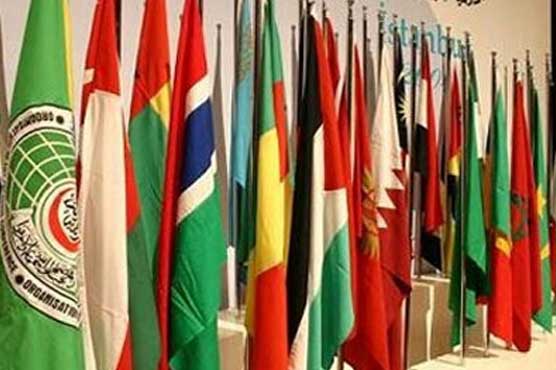
The summit of the 57-member Organisation of Islamic Cooperation opened on a day when the assassination of a leading Tunisian opposition politician highlighted the fragility of "Arab Spring" democratic revolutions in North Africa.
Tunisian President Moncef Marzouki cancelled his trip to the Cairo meeting after Shokri Belaid, a staunch secular opponent of the moderate Islamist government, was shot dead outside his home, triggering street protests.
With Iranian President Mahmoud Ahmadinejad making an ice-breaking visit to Egypt after 34 years of estrangement, the two-day meeting was focusing on how to stop the bloodshed in Syria, where President Bashar al-Assad counts Tehran as one of his last allies.
In a keynote address, Egyptian President Mohamed Mursi called on "the ruling regime" in Damascus to learn the lessons of history and not put its interests above those of the nation, saying that rulers who did so were inevitably finished.
Mursi urged all OIC members to support the Syrian opposition s efforts to unite and bring about change.
Heavy fighting erupted in Damascus on Wednesday as rebels launched an offensive against Assad s forces, breaking a lull in the conflict, opposition activists said.
Ahmadinejad earlier told Egyptian journalists there could be no military solution and he was encouraged that the Syrian government and opposition were moving towards negotiations to end a conflict in which at least 60,000 people have died.
"Fortunately in Syria at the moment matters between the two parties - the opposition and the government - are heading towards establishing the idea of dialogue and talking together," al-Ahram daily quoted him as saying.
Iran is the chief regional backer of Syrian President Bashar al-Assad, while Egypt and Gulf powerhouse Saudi Arabia bitterly oppose Assad and support rebels seeking his ouster.
Morsi called on opposition parties not allied to Syria s National Coalition, which is recognised by the international community, "to coordinate with this coalition and support their efforts for a unified approach... for democracy."
The meeting gathers leaders of 26 of the OIC s 57 states, with Morsi, Egypt s first Islamist president, assuming the organisation s rotating presidency.