Summary Thousands of Maoists gathered Saturday for their biggest show of strength.
HETAUDA: Party leaders who swept to power in 2008 elections following a peace deal are using a general convention in the southern industrial hub of Hetauda to shore up grassroots support amid growing disillusionment among the ex-fighters.
Around 3,000 delegates and hundreds of thousands of supporters attending the party s first convention in 21 years are expecting to hear a rousing opening address from leader Pushpa Kamal Dahal calling for unity among the rank-and-file.
"The biggest challenge we face is how to manage the former combatants, especially those injured during the war. The former fighters spent the most productive years of their lives fighting the war," said Uttam Basnet, 49, a regional leader in eastern Nepal.
"There are issues such as reintegrating them into the society they left to fight the war. We need a sustainable solution, not some temporary package."
Hetauda, a small but rapidly growing provincial city 130 kilometres (80 miles) from Nepal s capital Kathmandu, has a population of around 80,000 but this is expected to swell at least three-fold during the five-day convention.
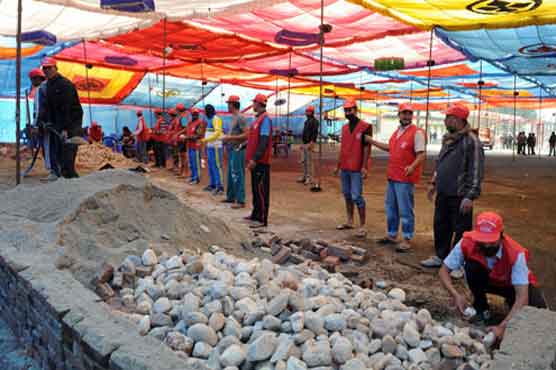
A giant marquee constructed at the edge of a playground will house around 200,000 supporters for the inaugural session later on Saturday, with buildings across the city displaying the red hammer and sickle flag of the Maoists.
Hundreds of police officers were patrolling streets festooned with banners welcoming the party but also displaying slogans demanding "a new communist party" and "down with factionalism".
Large parts of the city have been painted red and cafes, parks and hotels were buzzing with the excited conversation of Maoists from across the country, many of whom would be hearing from their leaders in person for the first time.
An estimated 16,000 people died in the 1996-2006 conflict fought by the Maoists against the monarchy, which was deposed when the rebels turned to mainstream politics and took power in elections.
Party leaders will spend the next five days trying to ensure the support of former cadres struggling to rejoin civilian life after the war, many of whom feel betrayed and say their sacrifices have been forgotten.
Rights campaigners say Nepal remains deeply divided and riven with gender and caste-based discrimination despite the Maoists promise after the insurgency to create a more equal society.
"There appears to be collective amnesia among Nepal s policymakers about the inequities and injustice that helped fuel the conflict in the first place," said Brad Adams of Human Rights Watch, which published a report on Friday criticising the nation s lack of progress on equality and justice.
In-fighting, including a split in the party last year, has confounded efforts to draw up a post-conflict constitution spelling out how Nepal should be run as a modern, democratic republic.
An interim assembly elected for the task was dissolved in May last year and fresh elections promised for November were shelved, with a new target of polls by May this year looking equally shaky.