Summary Kuwait's political rifts have widened as opposition vowed to boycott election and reject outcome.
Kuwait s deep political rifts took center stage in parliamentary elections Saturday as backers of the ruling establishment cast ballots while a broad opposition alliance staged a boycott and vowed to reject the outcome.
The voting capped months of political upheavals and showdowns in the oil-rich Gulf state a strategic Western ally and the polarized atmosphere suggested more tensions ahead.
Kuwait has the Gulf s most politically powerful parliament and the election is certain to restore control to pro-government lawmakers. Yet that doesn t guarantee any extra breathing space for the ruling system amid claims it is overstepping its powers.
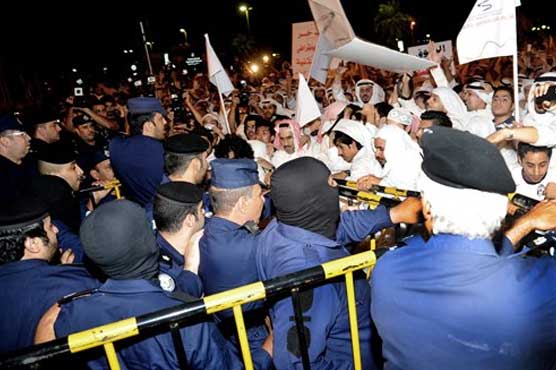
A wide-reaching coalition of opposition factions - ranging from hardline Islamists to Western-leaning liberals - already has challenged the legitimacy of the new parliament because of the boycott and could increasingly take their grievances to the streets.
Kuwait has largely escaped the unrest sweeping the region, and any potential for greater unrest is closely watched by Washington, which has thousands of U.S. ground forces in Kuwait as part of the Pentagon s military counterweight to Iran in the Persian Gulf.
Islamists and tribal allies won control of the 50-seat parliament in February elections, but the chamber was later dissolved over a legal challenge by the ruling establishment over electoral districts. Kuwait has been left without an effective working parliament for more than five months.
Complaints against authorities include increasing efforts to muzzle free speech and failure to have Kuwait s economy and growth keep pace with other dynamic Gulf centers such as Qatar s capital Doha and the United Arab Emirates hubs of Dubai and Abu Dhabi. Last month, four people were arrested on charges of insulting Kuwait s emir in Twitter posts.
Security forces watched over polling stations across Kuwait, but no disturbances were reported and the full 12-hour voting period was held. The voting sites vividly displayed the country s divides with pro-government areas showing steady turnout, but areas loyal to the opposition were almost deserted. Boycott backers tied pieces of orange ribbon - the adopted color of the opposition - around tree branches near some polling sites.
Some opposition groups predicted turnout could be well below 50 percent, compared with near 60 percent for the last parliamentary elections in February that were won by Islamists and their allies.
"I m certain that the boycott will have an effect on the turnout," said Information Minister Mohammad al-Abdullah Al Sabah, a member of the ruling family.
He appealed, however, for the opposition to confine their objections within the country s "legal framework."
The anti-government groups have bitterly denounced a decree in October by Kuwait s emir to end an unusual balloting system that allowed four choices per voter.
Critics claim the new one-vote-per-person rule will make it easier for state authorities to potentially influence the outcome. They also say the emir went beyond his authority by changing the voting rules without public debate.
On the eve of the election, more than 15,000 people joined a peaceful pro-boycott march in the first rally permitted by authorities since a ruling last month banning gatherings of more than 20 people.
Kuwait s parliament has the most powers of any among the Gulf Arab states. Opposition lawmakers have often fired off accusations of corruption and abuses against government officials, including the prime minister and other members of the ruling family.
The country also has some of the widest political and media freedoms in the region, but key government posts and policies remain under the control of the ruling family.
Yet Islamists and their backers also worry many Kuwaitis for open support of stricter Muslim codes such as censoring artists and imposing death sentences for those convicted of denigrating Islam.