Summary Iran fiercely rejected accusations of a nuclear weapons drive at the UN atomic agency Friday.
VIENNA - Iran fiercely rejected accusations of a nuclear weapons drive at the UN atomic agency Friday, making Western countries "very pessimistic" about prospects for diplomacy, as one diplomat put it.
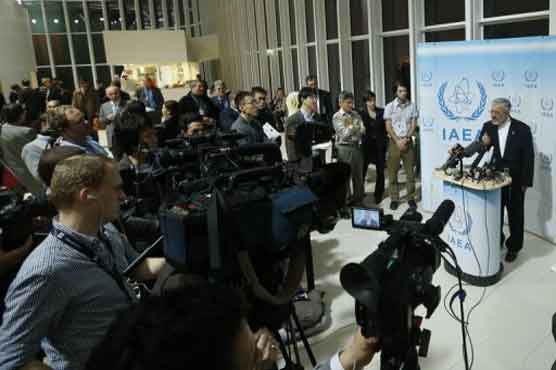
Iran s ambassador to the International Atomic Energy Agency, Ali Asghar Soltanieh, read out a list of the "50 most relevant questions" about Tehran s nuclear activities and 50 answers that he said showed the agency s file "has to be closed immediately."
Among other arguments, he said that the aim of Tehran s nuclear activities was peaceful, that the six resolutions on Iran passed by the UN Security Council were "illegal" and that Tehran would "never suspend" its programme, according to the text of his remarks.
Soltanieh also said that in the event of a military action, Iran may install nuclear equipment "in more secure places" and withdraw from the nuclear Non-Proliferation Treaty.
Israel has refused to rule out a military strike against Iran s nuclear installations.
One Western diplomat present at the closed-door meeting of the IAEA s 35-member board of governors in Vienna called Soltanieh s claims "absolutely ridiculous".
Soltanieh "did not address any of the issues that have been expressed in the board. It is very clear that the Iranians are not serious. I am very pessimistic," the diplomat said.
The IAEA is due to hold talks in Tehran on December 13 aimed at addressing what the agency calls "overall, credible" evidence that until 2003, and possibly since, Iran conducted activities "relevant to the development of a nuclear explosive device."
Several rounds of talks this year were fruitless however and Washington s envoy to the IAEA, Robert Wood, said Thursday that the US would push for the agency s board to take the rare step of referring Iran to the UN Security Council if Tehran displays no "substantive cooperation" by its next board meeting in March.
On another diplomatic track, the P5+1 powers -- the US, China, Russia, Britain, France and Germany -- said after a meeting in Brussels last week that they want talks with Iran "as soon as possible". This may happen as early as December.
But it is far from clear whether the P5+1 will want to sweeten an offer, made in talks in May and June, that for Tehran stopped short of offering sufficient sanctions relief.
Signals coming out of Iran meanwhile indicate that Tehran is not any readier to meet P5+1 and Security Council demands to suspend its most sensitive nuclear activities, most notably uranium enrichment.
Iran s nuclear chief Fereydoon Abbasi Davani also said Wednesday that Iran would continue "with force" to expand its activities.