Summary Israel and Hamas have signed a ceasefire agreement on Wednesday.
Egyptian authorities have verified the authenticity of the news regarding truce between Hamas and Israel.
Israeli authorities have made it clear that besiege of Gaza would not be withdrawn.
Egypt and Turkey played a crucial role in pacifying tension between the rival forces which have been at war for many years intermittently.
United States has now stepped in, with Secretary of State Hillary Clinton arriving in Cairo on Wednesday for talks with Egyptian President Mohamed Morsi.
During her flight, however, a bomb ripped through a bus in the Israeli city of Tel Aviv injuring at least 21 people - clouding the prospects of a durable ceasefire.
Mrs Clinton vowed to work on a truce between the two sides.
She said: "In the days ahead, the United States will work with our partners here in Israel and across the region toward an outcome that bolsters security for the people of Israel, improves conditions for the people of Gaza and moves toward a comprehensive peace for all people of the region."
She arrived from Israel where she earlier met with Mr Netanyahu in Jerusalem, while also travelling to the West Bank city of Ramallah for a meeting with Palestinian President Mahmoud Abbas, who told her "Egypt was the key to everything".
Hours later, UN secretary general Ban Ki-moon arrived in the Egyptian capital for talks with Mr Morsi and said there were "many details to work out" before an agreement could be reached. to end the conflict.
"I am particularly concerned about the spiral of violence at the time of intense efforts to reach a ceasefire," he said.
"We all know there are many details to work out, but what that happens civilians continue to die. That is why we need a ceasefire right now, immediately," he added.
Mr Netanyahu told Mrs Clinton that he was ready to agree to a "long-term solution" as long as the rocket attacks from Gaza stopped.
Earlier, Pope Benedict XVI also spoke of his concern of the escalating violence.
"Hatred and violence are not the solution," he said, adding that he encouraged "the initiatives and efforts of those who are trying to reach a ceasefire and promote negotiations".
Meanwhile, Iran announced it was providing military and financial assistance to the Palestinians.
"We are proud to defend the people of Palestine and Hamas and that our assistance to them has been both financial and military," said Iran s parliamentary speaker Ali Larijani.
Israel continued its bombardment of Gaza striking more than 100 targets, killing six Palestinians. These included a two-year-old boy and a four-year-old girl, according to reports.
Some 30 rockets were fired from Gaza into Israel. The Iron Dome system intercepted 14 of them.
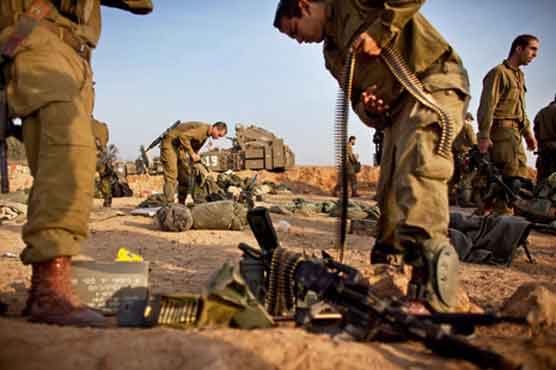
Israel launched the offensive one week ago in an attempt to end months of rocket attacks out of the Hamas-run territory, which lies on Israel s southern flank.
After assassinating Hamas military chief, it has carried out a campaign of airstrikes, targeting rocket launchers, storage sites and wanted militants.
The campaign has killed more than 140 Palestinians and wounded hundreds of others.
Five Israelis have been killed by rocket fire, including a soldier and a civilian contractor.