Updated on
Summary Six Italian scientists and a government official were sentenced to six years in jail on Monday.
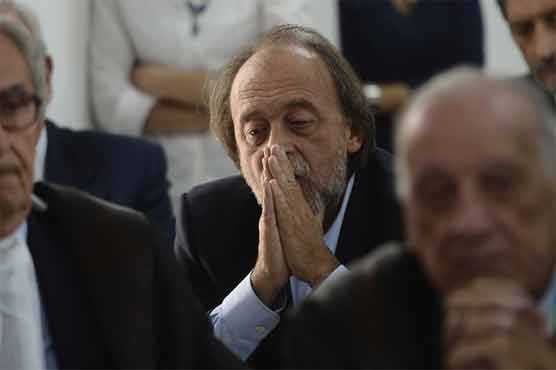
An Italian court convicted seven scientists and experts of manslaughter for failing to adequately warn citizens before an earthquake struck central Italy in 2009, killing more than 300 people.The court in LAquila also sentenced the defendants to six years in prison. Each one is a member of the national Great Risks Commission.In Italy, convictions arent definitive until after at least one level of appeals, so it is unlikely any of the defendants would face jail immediately.Scientists worldwide had decried the trial as ridiculous, contending that science has no reliable way of predicting earthquakes.Among those convicted were some of Italys most prominent and internationally respected seismologists and geological experts, including Enzo Boschi, former head of the national Institute of Geophysics and Volcanology.I am dejected, desperate, Boschi said after the verdict. I thought I would have been acquitted. I still dont understand what I was convicted of.The trial began in September 2011 in this Apennine town, whose devastated historic center is still largely a ghost town.The defendants were accused in the indictment of giving inexact, incomplete and contradictory information about whether small tremors felt by LAquila residents in the weeks and months before the April 6, 2009, quake should have constituted grounds for a quake warning.The 6.3-magnitude quake killed 308 people in and around the medieval town and forced survivors to live in tent camps for months.Many much smaller earth tremors had rattled the area in the months before the quake, causing frightened people to wonder if they should evacuate.I consider myself innocent before God and men, said another convicted defendant, Bernardo De Bernardinis, a former official of the national Civil Protection agency.Prosecutors had sought conviction and four-year sentences during the non-jury trial, which was led by a judge.A defense lawyer, Filippo Dinacci, told reporters that the sentence would have big repercussions on public administration since officials would be afraid to do anything.