Updated on
Summary Syria's civil war is spilling into neighboring countries Jordan and Lebanon.
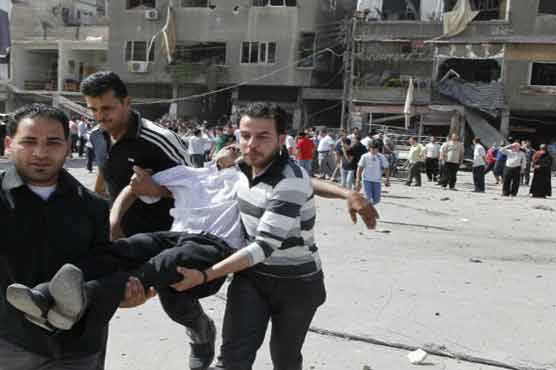
A Jordanian soldier was killed in clashes with armed militants trying to cross the border into Syria on Monday and sectarian clashes overnight in Lebanon left two dead as Syrias civil war spilled into neighboring countries.Jordanian Information Minister Sameeh Maaytah said the soldier was the first killed in violence related to Syrias civil war. He died in clashes with militants trying to illegally enter Syria to join rebels fighting President Bashar Assads regime. Maaytah did not say whether the militants were Jordanians or foreign fighters trying to jump into the fray in the neighboring country.A number of foreign Islamists have been fighting in Syria alongside the rebels. Jordans banned Salafi movement which promotes an ultraconservative brand of Islam has sent several fighters to Syria in past months and Jordanian border patrols have caught some of them recently.In Lebanon, troops launched a major security operation to open all roads and force gunmen off the streets, trying to contain an outburst of violence set off by the assassination of a top intelligence official who was a powerful opponent of Syria. Sectarian clashes overnight killed at least two people.Sporadic cracks of gunfire could be heard in the Lebanese capital as troops began the operation a day after the funeral for the slain official, Brig. Gen. Wissam al-Hassan.Opponents of Syria have blamed the regime in Damascus for the al-Hassans killing in a Beirut car bomb on Friday. With Lebanon already tense and deeply divided over the civil war next door, the assassination has threatened to drag the country back into the kind of sectarian strife that plagued it for decades much of it linked to Syria.In the Lebanese capital, soldiers backed by armored personal carriers with heavy machine guns took up position on major thoroughfares and dismantled roadblocks. At times, troops exchanged gunfire with Sunni gunmen.Al-Hassan was a Sunni who challenged Syria and its powerful Lebanese ally, the Shiite militant group Hezbollah. The uprising in Syria is dominated by the Sunni majority fighting Syrian President Bashar Assad, who like many in his regime is a member of the Alawite sect an offshoot of Shiite Islam. Lebanon and Syria share similar sectarian divides that have fed tensions in both countries.Most of Lebanons Sunnis have backed Syrias mainly Sunni rebels, while Lebanese Shiites tend to back Assad.The assassination has imperiled Lebanons fragile political balance.Many politicians blamed Damascus for the killing and angry protesters tried to storm the government palace after al-Hassans funeral on Sunday, venting their rage at leaders they consider puppets of a murderous Syrian regime. But they were pushed back by troops who opened fire in the air and lobbed volleys of tear gas.Meanwhile, cease-fire efforts by UN and Arab League envoy to Syria Lakhdar Brahimi appeared to be faltering.More than 33,000 people have been killed since the uprising started in March last year.Syrian authorities blame the revolt on a foreign conspiracy and accuse Saudi Arabia and Qatar, along with the US, other Western countries and Turkey, of funding, training and arming the rebels, whom they describe as terrorists.