Updated on
Summary The decision to suspend Syria requires support of two thirds of members.
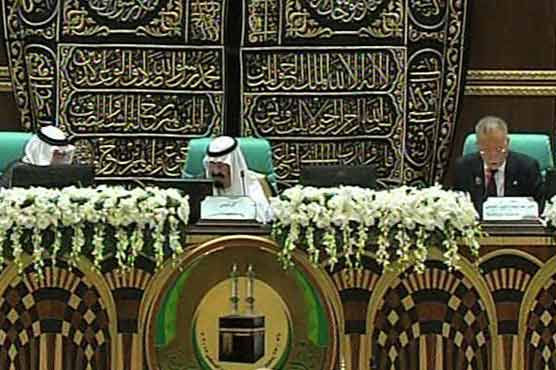
Leaders of Muslim countries are expected to suspend Syrias membership of the Organisation of Islamic Cooperation at a summit in Mecca on Wednesday, despite the vocal objections of President Bashar al-Assads main ally Iran. The 57-member body have already agreed to suspend Syria from the OIC over President Bashar al-Assads crackdown on protests. Syrias civil war has divided Muslim countries on sectarian lines, with Sunni-led Arab states and Turkey backing Syrias rebels, while Shiite Iran supports Assad.Sunni Saudi Arabia and Shiite Iran have tussled for influence in recent years in sectarian conflicts across the Middle East.King Abdullah seated Iranian President Mahmoud Ahmadinejad at his side as the summit opened, in an apparent conciliatory gesture.Ahmadinejad, wearing the dark suit and shirt without tie in a fashion favoured by Iranian leaders, sat at the left hand of the octogenarian king who wore traditional Arab robes.Leaders from major Middle Eastern and South Asian states arrived in the entrance chamber, including Ahmadinejad who acknowledged the media by making a peace sign with his right hand before entering the meeting room.Afghanistans President Hamid Karzai, Egyptian President Mohamed Mursi and newly-elected Libyan President Mohammed Magarief were among those attending the summit.Riyadh has called for Syrians to be enabled to protect themselves if the international community cannot protect them, and has excoriated Assads use of force against civilians.Syrias mainly Sunni Muslim rebels are backed by Sunni-ruled Arab states such as Saudi Arabia and Qatar as well as Turkey, while Shiite Iran supports Assad, a member of the Alawite minority sect, an offshoot of Shia Islam.Analysts have billed the summit as a potential showdown between Iran and Sunni states led by Saudi Arabia over Tehrans support for Syrian President Bashar al-Assad in his 17-month suppression of a popular uprising.