Updated on
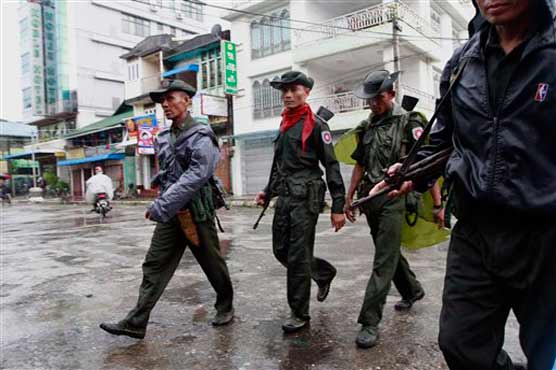
Summary About 60 people have been killed during communal violence in western Myanmar.
It has also posed a challenge for the newfound freedom of the countrys press, testing the limits of free speech and good taste.The publisher of the Hlyat Tabyet, or Snapshot, weekly journal said Friday he has been summoned to court to face criminal charges for publishing material that allegedly could induce the public to commit acts of public mischief.He said the court summons for Monday did not detail the charges but could be related to a photo of the body of an ethnic Rakhine girl with face blurred out who was raped and murdered by three Muslim men.The crime fueled this months mob violence between the Buddhist Rakhine and Muslim Rohingya communities in Rakhine State, which left at least 62 people dead, thousands of homes burned down and tens of thousands of people displaced.Myat Khine, Hlyat Tabyets editor and publisher, said the governments Press Scrutiny and Registration Division had already on June 11 suspended the journals license for publishing the photograph, which the authorities deemed inappropriate and capable of inciting unrest. It has now missed two issues.Lawsuits involving the media are a new development in Myanmar under President Thein Seins government, which has loosened some restrictions on the press as part of its recent reforms after five decades of repressive military rule.Under the previous military regime, strict media censorship determined what was fit to print and violators faced arbitrary punishment and severe penalties.I printed a photograph that had been circulating for a couple of days and after the communal clashes had already broken out, Myat Khine said. The photograph in my journal did not cause any further violence.A few days after the journal published the photo, the chief minister of Yangon Region told editors and reporters to avoid writing reports that could instigate further violence. Myint Swe warned that anyone who violates laws against undermining state security or spreading news that could cause disorder could face jail terms of up to seven years.Such prosecutions would stifle freedom of expression and a free press, said Myat Khine.In recent months, a government ministry filed a defamation suit against a weekly publication called The Voice over an article about misappropriation and irregularities in four ministries financial accounts. The article cited a report from the auditor generals office to the parliaments Public Accounts Committee.Another weekly publication, The Modern, had faced a defamation case over an article that alleged truck drivers had bribed engineers at the Construction Ministry to let them use a certain bridge even though their vehicles exceeded the weight limit. One of the engineers sued the publication, but the two sides settled after the magazine printed a correction.