Updated on
Summary The exiled Tibetan spiritual leader met with Cameron on Monday.
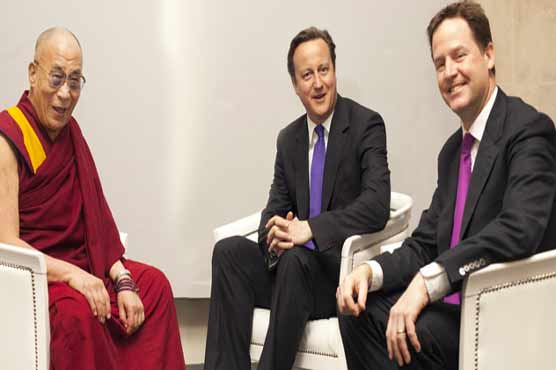
Chinas Vice Foreign Minister Song Tao summoned the British ambassador in Beijing on Tuesday to protest British Prime Minister David Camerons meeting with the Dalai Lama, saying the meeting seriously interfered with Chinas internal affairs.The exiled Tibetan spiritual leader, who is considered a separatist by Beijing, met with Cameron on Monday. The meeting was, however, not held at Camerons official Downing St residence in a gesture to Chinese sensibilities.Song summoned British ambassador Sebastian Wood and said that British leaders should fully consider the serious consequences of meeting the Dalai Lama, the Chinese Foreign Ministry said in a statement. It said the meeting seriously interfered with Chinas internal affairs, undermined Chinas core interests, and hurt the feelings of the Chinese people.Song urged Britain to take practical actions to correct the error. Chinas response echoed many previous statements about the Dalai Lamas meetings with foreign political leaders, suggesting that China will confine its reaction to angry words.British ministers believe that who they see is a matter for them, said a British Foreign Office spokeswoman in London. If they choose to see someone, it does not necessarily indicate they support that individuals viewpoint.The Dalai Lama told reporters on Monday that China is beset by a moral crisis, widespread corruption and lawlessness, leading millions of Chinese to seek solace in Buddhism. He was in London to receive the $1.7 million Templeton prize for his work affirming the spiritual dimension of life.The Dalai Lama denies seeking independence for Tibet, saying he wants a peaceful transition to true autonomy for the remote Himalayan region, which China has ruled with an iron fist since 1950, when Chinese troops marched in. He has lived in exile in India since fleeing his predominantly Buddhist homeland in 1959 after a failed uprising against Communist rule.