Updated on
Summary The allies announced on Friday an agreement to move 9,000 Marines from Okinawa to the US.
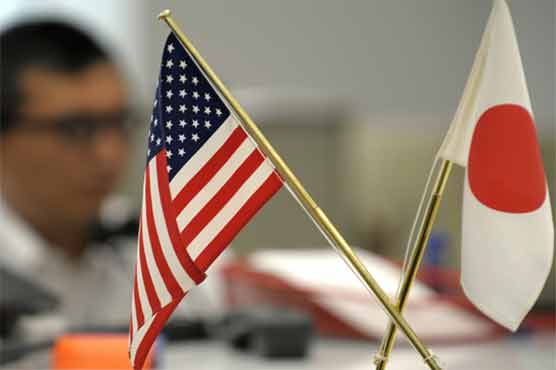
The leaders of Japan and the United States meet Monday to look at new ways to cooperate in defense, hoping to show that the alliance is back on track after a rocky few years.Amid fears that North Korea will test another nuclear bomb, Japans Prime Minister Yoshihiko Noda will hold talks at the White House with President Barack Obama days after a deal on a thorny dispute over US troops.Noda is the first Japanese premier to visit Washington for a solely bilateral visit since the 2009 election of his center-left Democratic Party of Japan sent long-stable relations into a tailspin.I would like to exchange views candidly on the vision of a future US-Japan alliance. I want the meeting to be fruitful so that the public can see clear results, Noda told reporters on departure from Tokyo.The allies announced on Friday an agreement to move 9,000 Marines from Japanese island of Okinawa to the US territory of Guam, addressing a persistent source of friction. Tiny Okinawa is host to half of the 47,000 US troops in Japan.As part of the agreement, the two countries said they would consider setting up their first permanent joint training bases in Guam or the nearby Northern Mariana Islands. The move would carry heavy symbolism for Japan, which has been officially pacifist since the end of World War II.Kurt Campbell, the US assistant secretary of state for East Asia, called the training proposal a very important step that has never been achieved before. But the agreement preserves a key controversial element of a 2006 plan between the two countries -- building an air base on a quiet seashore. The two sides had hoped the 2006 arrangement would end concerns by moving the base out of a crowded urban area, but some activists pressed for its complete removal.Weston Konishi, director of Asia-Pacific studies at the Institute for Foreign Policy Analysis, said the deal was a good face-saver for both sides but went little beyond previous statements. The latest accord showed that the United was flexible and willing to make a good-faith effort, while for Noda, it showed that he was serious about trying to do his best to reduce the footprint of US troops in Okinawa, he said.Obama had made an early effort to reach out to Japan, inviting then-prime minister Taro Aso as his first White House guest in hopes of dispelling concern that the new administration would ignore Asian allies as it focused on managing the complicated relationship with a rising China.But Yukio Hatoyama, the first prime minister after the Democratic Party of Japan ousted the long-ruling conservatives, dismayed the United States by flirting with China and insisting on renegotiating the Okinawa deal.Hatoyamas successor, Naoto Kan, but he faced wide criticism for his handling of the massive March 11, 2011 earthquake and tsunami tragedy in which US troops mounted a round-the-clock rescue effort. The Obama administration initially found hope in Noda but his governments approval rating has also fallen precipitously as he pushes forward a proposal to double sales tax to tame a massive public debt.Noda heartened the Obama administration after taking office last year when he voiced interest in the Trans-Pacific Partnership -- an emerging US-led free trade deal across the Pacific Rim. But Noda has faced heated opposition, with farmers leading a major protest campaign out of fear that the trade agreement would jeopardize their livelihoods.A senior US official, speaking on condition of anonymity, conceded that the United States no longer expected Noda to announce during his visit a formal entry into talks with the nine nations negotiating the deal. The Obama administration will instead focus largely on symbolic gestures to show warmth toward Japan. Secretary of State Hillary Clinton will welcome Noda to a gala dinner and a private viewing of an exhibition on samurai.The United States will also unveil a long-discussed proposal to gift 3,000 dogwood trees to Japan in a sign of gratitude marking 100 years since Tokyo delivered Washingtons now famous cherry trees.