Summary She stressed that no meaningful roadmap for national development can be envisioned without integrating women into all sectors, particularly the digital economy.
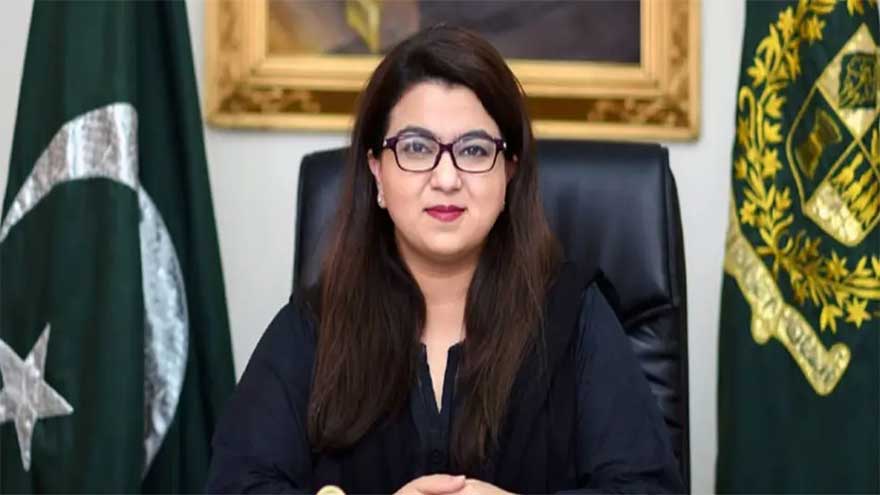
ISLAMABAD (APP) - Federal Minister for Information Technology and Telecommunication Shaza Fatima Khawaja on Thursday underscored that Pakistan’s economic progress and digital transformation are closely tied to the empowerment and inclusion of women, who constitute nearly half of the country’s population.
Addressing an event, the minister described information technology as a “great equalizer” capable of bridging gender disparities and expanding economic opportunities.
She stressed that no meaningful roadmap for national development can be envisioned without integrating women into all sectors, particularly the digital economy.
Highlighting the policy direction, she said the government is actively promoting women’s participation in the technology sector—traditionally perceived as male-dominated—reflecting growing confidence in women’s leadership and capabilities.
She added that despite social challenges and dual responsibilities at home and work, women in Pakistan are steadily advancing and setting new benchmarks across industries.
The minister pointed out that over one million young people have been trained in digital skills over the past two years under initiatives such as DigiSkills.pk and Ignite.
Women currently account for around 36 percent of enrolment in certain programmes, with ongoing efforts to achieve gender parity.
She further shared that approximately 300,000 individuals are presently enrolled in DigiSkills programmes, with women’s participation steadily approaching 50 percent.
Similarly, women’s representation in National Incubation Centers has crossed 35 percent, with plans to expand it further.
Emphasising the transformative potential of the ICT sector, the minister said digital platforms offer flexible work opportunities, enabling women to overcome traditional barriers through remote employment, entrepreneurship, and online education.
“Technology today is embedded in every aspect of life—from health and education to business and daily activities—and women must fully benefit from this transformation,” she added.
Referring to financial inclusion initiatives, the minister highlighted the government’s move to digitise Ramadan subsidies under the Benazir Income Support Programme.
She said the initiative enabled more than 825,000 women to open digital wallets within a month, ensuring transparency, dignity, and ease of access.
These women have since carried out nearly two billion transactions, including utility bill payments and everyday purchases.
To further support access to digital services, the government, in collaboration with the Pakistan Telecommunication Authority and telecom operators, has facilitated the provision of free SIM cards to women beneficiaries.