Summary Cyber security expert says most calls she receives from women are regarding blackmailing on photos
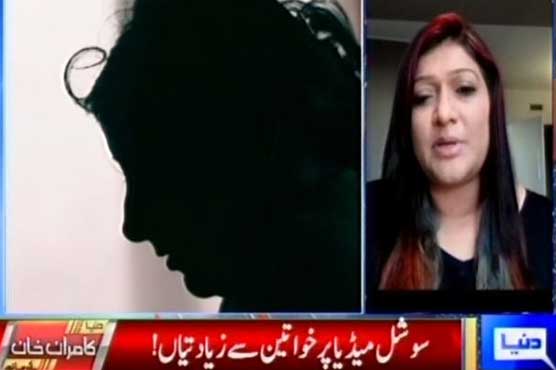
LAHORE: (Dunya News) - Digital Rights Foundation Executive Director Nighat Dad has on Wednesday said that the biggest number of complaints that she receives from women were regarding blackmailing on their photos. She said that a woman must not share her account details with anyone, no matter how much they are trusted, reported Dunya News.
Talking to Dunya Kamran Khan Kay Saath, Nighat Dad said that the biggest problem that women often faced regarding online security was that they shared their passwords with someone who later started blackmailing them. She said that the first tip she would like to give to people was that they must never share their account details with anyone.
"People often share their account details with their partners, who they are in relation with. They can be married couples or engaged with each other or at times they can be friends as well. They share it hoping that this would strengthen their relationship with each other. It is a very wrong practice when it comes to cyber security", Nighat said, "because when these relationships don t come to a positive end, they can easily be used for blackmailing".
She added that the passwords for accounts on various platforms were often set the same by many people. "This is a wrong practice too".
Nighat said that Federal Investigation Agency s (FIA) cyber security wing was also being complained against. She said that she often received complaints that the FIA s cyber secuirty wing didn t listen to the problem completely or wouldn t do anything about it.
"It is first and foremost our own duty. The security settings on Facebook, Twitter and other websites must be looked at thoroughly. Most of the issues would not even arise if we set our privacy settings right", she said.
"Prevention of Electronic Crimes Act was passed earlier this year. Some of its clauses address this issue. But the problem is that its rules haven t been laid out as yet. So how the courts would deal with these issues? It is also important to see how FIA s cyber security wing improves its capacity to deal with these issues, and how much it succeeds in gender sensitisation of its own employees".
"98% of the calls we receive are from women, who get harassed. We always tell them to keep the evidence of the messages in which they are harassed, mentally or sexually", she said.
Watch video: