Summary Japanese want an end to nuclear power and to nuclear weapons around the world.
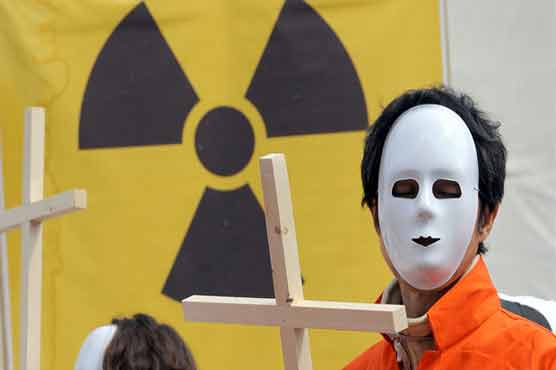
HIROSHIMA, Japan (AP) - "No more Hiroshimas!" No more Fukushimas!"
Those slogans are chanted together at rallies by Japanese who want both an end to nuclear power in the island nation and an end to nuclear weapons around the world.
But many in this city, where the world s first atomic-bomb attack killed tens of thousands, are distressed by efforts to connect their suffering to the tsunami-triggered meltdowns at the Fukushima Dai-ichi nuclear plant.
Like the bomb the United States dropped on Hiroshima Aug. 6, 1945, the March 2011 Fukushima disaster unleashed radiation that will affect the region s health for decades.
Hiroshima medical experts, the world s most renowned on radiation-related sicknesses, are being called on for advice on how the meltdowns may have harmed people who lived near the power plant along the northeastern coast of Japan.
Some in the historical movement against nuclear non-proliferation have joined the protests that have popped up after Fukushima, calling for an end to nuclear power.
Calls out of Hiroshima to do away with nuclear weapons carry great moral weight in Japan, and activists are asking the city to join forces and sign their petitions demanding the government ditch nuclear power.
To opponents of this idea, the differences between Hiroshima and Fukushima dwarf the similarities. Only one of the two catastrophes was an act of war that unleashed death, fire and horror on a scale the world had never seen.
"Our position, and this is a position we can never compromise, is that nuclear weapons are an absolute evil," Hiroshima Mayor Kazumi Matsui said in an interview at city hall, his voice trembling. "I oppose connecting the two simply because they both involve radiation."
The widespread sentiment in this southwestern city, he said, is that Hiroshima has endured something more terrible than the aftermath of a nuclear accident, and people resent getting lumped together.
Matsui lost relatives in the attack, and his parents home was destroyed.
The bombing killed some 140,000 people some instantly, others within months.
Three days later, the U.S. dropped a second atomic bomb on Nagasaki, killing an estimated 70,000 people shortly before the end of World War II.
Those categorized by the government as sick from the Hiroshima bombing s radiation still number more than 200,000.
No one is known to have died from the Fukushima radiation, but the plant s three nuclear meltdowns will take decades to clean up and it is impossible to know what the health toll will ultimately be.
Only recently has the government acknowledged that much more radioactive water is leaking into the sea than it had previously believed.
The Japanese government has detected 44 confirmed and suspected cases of thyroid cancer among the 217,000 youngsters, 18 and under, checked in Fukushima. Thyroid cancer among children is generally rare, estimated at only one in a million.
The link to radiation is still inconclusive, and extensive testing of Fukushima children could account for the higher numbers.
But according to the World Health Organization, thyroid cancer struck thousands of people after the only nuclear-plant disaster worse than Fukushima, the 1986 Chernobyl meltdown in what is now Ukraine.
Robert Jacobs, professor at the Hiroshima Peace Institute, sees similarities between Hiroshima and Fukushima, calling the latter a "slow-motion nuclear war."
He said the cumulative radiation dosage from Fukushima could be quite significant because the leaks are likely to continue for decades.
Some medical experts are worried about sickness that may emerge in coming years, although the amount of deadly energy released at the moment of the atomic bombing was far greater than what spewed from Fukushima.
Shuntaro Hida, 96, was among the doctors who treated the people of Hiroshima within days of the bombing.
He has been outspoken about the dangers of what scientists call internal radiation, the ingestion of radioactive material from the air, water and food.
Hida said he witnessed the deaths of hundreds of people who entered Hiroshima after the bombing, victims of radiation exposure that led to diseases including cancer, strokes, organ failure and leukemia.
"No one wanted the world to know that the bomb could continue to kill for so many years later," he said.
In Hida s view, that is at least one area in which the nuclear cataclysms are intertwined. He said Hiroshima never fully faced up to the effects of internal radiation, and that same mistake is being repeated in Fukushima.
___