Summary Have helped rescue stranded hikers, contain wildfires and gathered data at nuclear accidents.
LE BOURGET (AP) - One helped a Russian tanker find its way through Arctic ice to bring oil to a stranded Alaskan community.
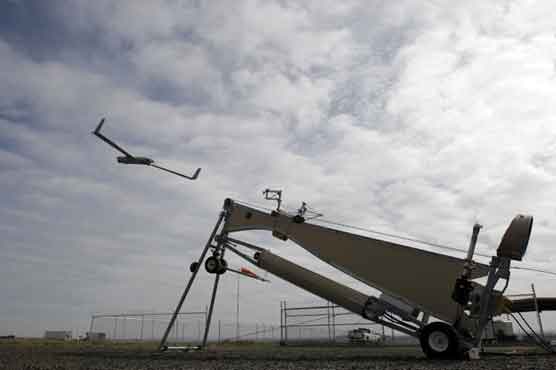
These remote-controlled planes have many more potential peacetime uses. But unmanned aircraft have an image problem: They re also known as drones.
That word conjures up pilotless planes dropping bombs or spying in war zones. But industry officials and regulators say the day is coming when unmanned aircraft will be regularly used for more mundane purposes and people will be at ease with them appearing in their skies.
For people to change their opinion, they "have to see the benefits," said John Langford, chief executive of Aurora Flight Sciences Corporation.
A report commissioned by the Association for Unmanned Vehicle Systems International, a US industry lobby, predicts that the integration of unmanned aircraft into US aviation will create 70,000 jobs for the first three years and generate $13.6 billion of business.
At the Paris Air Show this week, manufacturers were pushing the civil uses of the products. French-based Delair-Tech displayed a small drone that can survey for damage to utility lines; a small Swiss company, senseFly, showed off its Styrofoam planes that are used for mapping land and the Oklahoma-based Design Intelligence Inc. introduced solar-powered drones that could carry small cargo, like medicine, to remote places.
So far, most civilian drones are small, with many used for data-gathering. They have also flown into forest fires in Arizona to take temperatures and help firefighters understand where the blaze might go next. They have helped patrol the US-Mexican border and been used by scientists to track animal migration.
But some manufacturers are already imagining a day when pilotless cargo flights will crisscross the globe or even tiny helicopters will deliver tacos to hungry snackers.
A research team at the University of Maryland has developed a robotic bird whose movements are so life-like, other birds have been fooled by it, either stalking it or moving into formation behind it. S.K. Gupta, the lead researcher, said the bird was born out of a desire to create something highly maneuverable that was also very quiet.
But for the market to take off, the public has to become comfortable with the idea of these unmanned aircraft being used for peacetime purposes. And for this to happen, regulators around the world have to tell manufacturers where and when they can fly their creations.
No one knows exactly how many civilian drones fly these days partially because of the ad-hoc regulation but the number is likely in the thousands in the US Typically they do so only under severe restrictions. In the US, each one needs to get specific permission from the FAA.
The regulator only grants permission to public agencies, like police or fire departments, or to research institutions. The aircraft have to be within the sight of their user or be followed by a chase plane, so a human being has eyes on the drone at all times.They usually fly in unpopulated areas and well below the zone commercial air traffic uses.
But the FAA is working to expand their use. Congress has asked it to develop a comprehensive set of rules for unmanned aircraft by 2015.
At the same time, regulators from around the world are also in discussions with one another to coordinate their plans. Last year, France came up with a set of regulations that it says is still adapting, but they already allow some unmanned aircraft to fly beyond the sight of the operator.
Aurora Flight Sciences Langford warns that that proper regulation will require big investment in upgrading the current air traffic control system. Selling such investment is tough in a bad economy.
There is also the public fear that the drones military purpose will be turned on them and they will be spied on. Recent revelations that the National Security Agency is collecting vast amounts of data on phone and Internet usage is only likely to increase those fears, even though advocates point out that the NSA didn t need drones to collect email records.
Once the rules are in place, civilian drones will most likely first be used for surveying or spraying crops and checking oil and gas pipelines. In both cases, the work is tedious, remote and often hazardous work proponents of drones describe "dull, dirty and dangerous."
James Grimsley, president of Oklahoma-based Design Intelligence, says it s the workaday uses that will ultimately drive the use of drones and should solve the image problem.