Summary Some 47% of fish stocks in the Atlantic and 80% in the Mediterrenean are believed to be overfished.
BRUSSELS (AFP) - EU fisheries ministers began difficult talks Monday on reforms to the bloc s under-pressure fishing regime, with plans to stop the dumping of unwanted fish a key sticking point.
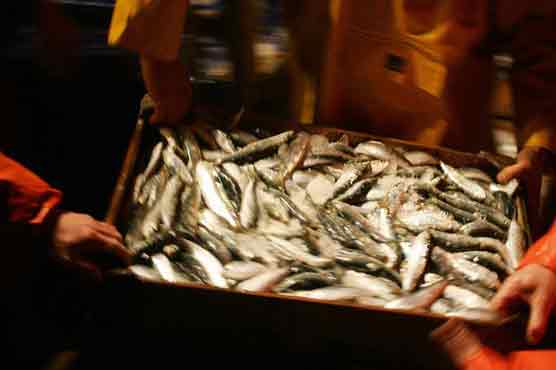
European fishing boats have long discarded fish, by some estimates up to a quarter of their catch, before entering port to ensure they meet strict EU quotas.
Ireland, which holds the rotating EU presidency, is pushing for a compromise between northern member states ready to end the practice and their southern counterparts anxious to preserve their fishing industries.
"We have very serious work to do over the next two days," said Irish Agriculture and Fisheries Minister Simon Coveney.
"Hopefully colleagues will work with me ... so that we can bring the Common Fisheries Policy reform to a final decision very soon," Coveney said.
"The talks will be really tough," an EU source said, noting that while all sides agree on the need for change given the strains on fish stocks, how to do that was hugely problematic.
In February, the European Parliament approved a total ban on fish discards from next year but this ran into strong opposition, from Spain especially.
Coveney subsequently worked out a compromise based on the principle that in future all fish caught must be brought to land.
However, in the first two years of the new policy, fishermen would have the right to discard up to 9.0 percent of their catch overboard, falling to 8.0 percent for the next two years and then finally to 7.0 percent.
Environmentalists said this provision undermined the whole reform effort while supporters argued that the fishing industry needed this flexibility so as to manage the catch effectively.
There are also divisions over when the industry should be put on a Maximum Sustainable Yield basis, a regime meant to ensure an adequate breeding stock remains. European Parliament wants 2015 while opponents say this is much too early and would require too radical a change for fishermen.
"You have to take into account the economic and social problems that drastic measures could involve," Spanish Agriculture and Fisheries Minister Miguel Arias Canete Monday.
EU Fisheries Commissioner Maria Damanaki called on all sides to compromise for the sake of a "historic accord which will allow fish stocks to recover.
"It is everyone s responsibility not to jeopardise a final agreement for the sake of a few percentage points, a year or two, technical details or a power struggle between institutions," Damanaki said.
The talks are due to conclude Tuesday but some caution that they could last through to Wednesday. Some 47 percent of fish stocks in the Atlantic and 80 percent in the Mediterrenean are believed to be overfished.