Updated on
Summary Russian parliament has approved a bill to blacklist some Internet sites.
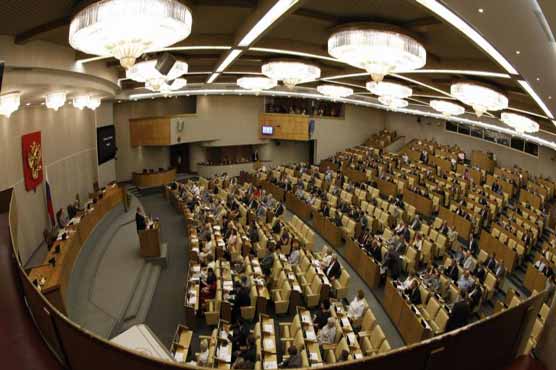
In a further controversial move, deputies also passed in first reading a bill that makes libel and slander criminal offences with punishment of up to five years.The goal of the bill is to wipe out dissent in our country, Communist deputy Anatoly Lokot exclaimed at the hearings as other opposition deputies said that restrictive bills are introduced faster than they can read them.The two bills are criticised as likely to be used against the opposition and follow initiatives hiking protest fines and introducing the term foreign agents for NGOs with funding from abroad.The trend to fast-track certain bills after their introduction by majority party United Russia led some critical lawmakers to compare the parliament to a secretarial office of the Kremlin.The Russian-language version of Wikipedia went on strike the day earlier in protest at the bill that is advertised as a crackdown on child pornography by creating a register of blacklisted sites and obliges site owners and providers to close them.Imagine a world without free knowledge, it said, blocking access to the site. The site was back up on Wednesday as deputies passed the bill with next to no debate or public discussion.Mind boggling, opposition leader Alexei Navalny wrote on Twitter after even opposition deputies voted to pass the law, calling them idiots.The bill has to be signed by President Vladimir Putin and is expected to become law in November.Russian newspapers said Wednesday the final version had narrowed a previously broad term of harmful information, saying only child pornography, suicide how-to instructions and drugs propaganda can lead to website closure without a trial.However, an expert on Russias security services, Andrei Soldatov, said the bill would lead to creation of a mechanism for blocking foreign sites for the first time by forcing Internet providers to install special equipment.Clearly, it will be possible to use it not just against websites propagating pornography; the government will be able to use these instruments any way it wants, he wrote on his website Agentura.ru.Russias biggest search engine Yandex said the bills proposed methods to fight pornography create room for possible misuse and raise questions from Internet users and company representatives.Such decisions cannot be taken hastily, the way it is happening now, said the statement signed by the companys chief editor Yelena Kolmanovskaya. The engines slogan Everything will be found had the word everything crossed out on the main page on Wednesday.The amendments can lead to introduction of censorship to Russian Internet, said Livejournal, a popular blogging platform frequently used by opposition leaders for communicating with their audience.The new libel bill breezed through the voting process in the parliament in the first reading and could be passed before the end of this week before the Duma session ends for summer break.The bill creates a new criminal charge making slander and libel subject to a jail term of up to five years. The charge was previously decriminalised during Dmitry Medvedevs presidency under the drive to liberalise the criminal code.Opposition deputies on Wednesday decried what they said was a trend of introducing restrictive bills at short notice and ramming them through without any public discussion.We are turning the parliament into an secretarial office that carries out somebody elses wishes, opposition deputy Gennady Gudkov of the Just Russia party said at the hearings.