Updated on
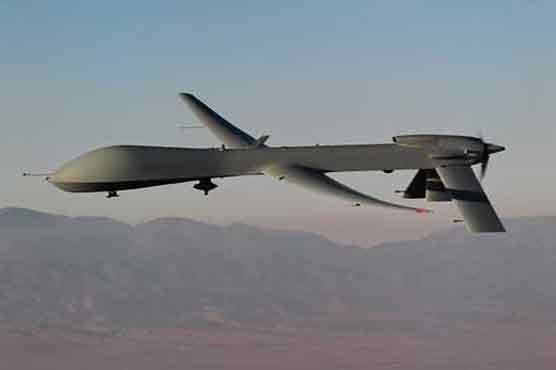
Summary Japan's Tuesday announced a project to develop a drone to measure radioactivityin environment.
Japan has been forced to invent or improve systems for measuring radioactive contamination since a 9.0-magnitude quake and tsunami in March 2011 sparked the worlds worst nuclear crisis in a generation at the Fukushima atomic plant.Remote-controlled helicopters have been used but are not suitable for remote and mountainous territory as they have to fly low and the operator has to be able to see the aircraft, the Japanese Aerospace Exploration Agency (JAXA) said.But unmanned aircraft could fly at higher altitudes over potentially contaminated areas, resolving the issue.The plan is to develop a 2.6-metre-long aircraft with a 4.2-metre wingspan.Radiation from Fukushima, in northeastern Japan, was scattered over a large area and spread as far as several hundred kilometres from the power station by wind and rain.Tens of thousands of people were evacuated from their homes around the plant and swathes of the area remain badly polluted. The clean-up is proceeding slowly, amid warnings that some towns could be uninhabitable for three decades.Airlines, ticket firms battle over booking systemAirlines want to raise new revenues by selling extras services alongside tickets.Airlines are locked in a battle with three companies that dominate the bookings industry over the introduction of a new global reservation system.Carriers complain the current system is a costly 1970s throwback without Internet-era convenience. They want to cut out the global ticket booking systems Sabre Holdings, Travelport Ltd. and Amadeus IT Group that some reject as obsolete middlemen who add costs. A former chief of the global aviation industry group called them leeches.The booking companies retort that they have invested to upgrade services and are working hard to meet carriers needs.The battle highlights how crucial fees from add-ons are to a struggling industry that is being squeezed by high fuel costs and a global economic slowdown. Airline profits are forecast at $3 billion this year, a wafer thin margin of just 0.5 percent on projected revenues of $631 billion, according to the International Air Transport Association.Carriers might be forced to abandon traditional distributors if they fail to change, said Rob Fyfe, CEO of Air New Zealand at an IATA conference in Beijing.They will either adapt to be able to support our product or we will find a different way of selling it, he said.Fyfe cited his airlines Economy Skycouch, which allows passengers to pay for three adjacent seats and turn them into a sleeping platform. He said Air New Zealand can sell the service only through its own website. Its very difficult to sell through travel agents using the traditional systems, he said.But for travelers, a new reservation system might not be all good news even as airlines promise theyll be able to offer their customers greater choice.While airlines can make more money from selling extras, it also means more travelers are getting squeezed as theyre forced to pay for things that used to come with the ticket such as seat assignments. U.S. airlines, for example, are setting aside more economy seats requiring an extra fee because they come with more legroom or are closer to the front.The premium seats can be booked through an airlines own website, but are more difficult to book through travel sites using distributor information, such as Expedia, Orbitz and Travelocity. A new global reservation system could eliminate those problems for airlines.IATA, the industry group, says it wants to find a solution that benefits everyone but tension over tickets and how to split up revenues has led to legal battles in the United States.An antitrust lawsuit by American Airlines, a unit of AMR Corp., against Sabre Holdings and Travelport, and online travel site Orbitz is due to go to trial this summer in Texas. American accused the companies of monopolizing distribution of flight information to travel agencies and trying to control ticket distribution.The extra revenue from add-ons such as seat assignments and priority check-in could total $30-$60 billion over the next five years, said Yanik Hoyles, director of business development for IATA, citing industry estimates.The bookings industry has invested some $500 million over the past three to four years to develop technology to support the services sought by airlines, but travel agencies have been slow to adopt it due in part to the cost of switching, said Gillian Gibson, executive vice president of Travelport.We believe we are making the right investments, she said. We need to have an incentive for them to shift to a new technology. Under the current model, travel agents receive commissions from airlines through the distribution systems, leaving them little incentive to move to another system.Airlines are also playing catch-up to a practice widespread elsewhere in the e-commerce world: mining stored data on a customers previous purchases to tailor product recommendations. They want to be able to offer special deals based on previous buying patterns, in the same way that Amazon uses a users data to create a customized list of recommended books.In an example envisioned by IATA Chief Executive Tony Tyler, a customer buying tickets on an airlines website could be offered, say, tickets to see Les Miserables based on data showing that the traveler had bought tickets to see Cats on a previous trip to the same city, according to an interview Tyler gave to an aviation trade journal last year.It already happens in the world of retail today. Why shouldnt it happen with airlines? said Aleks Popovich, an IATA senior vice president.The group is developing standards for a system that will allow airlines to offer additional services and help customers interact with carriers directly or through travel agencies or other services, Popovich said.Experts from Google Inc., IBM Corp. and Hewlett-Packard Inc. were included in discussions of a proposed plan thats due to be submitted to the aviation groups board in December for consideration, Popovich said.He said its unclear how long it might take to roll out a system, but he pointed to the example of paperless electronic tickets, an IATA initiative that he said took two to three years to be adopted worldwide.I cant give a date, but its pretty clear the pressure for change is there, said Popovich.