Summary FIFA cautious about allowing technology to help to decide on such decisions as red cards, penalties
HOLYROOD, Northern Ireland: (AP) - There is no prospect of referees being allowed to defer to video replays soon, with soccer s rule-makers saying more information on the technology is required before in-game trials can go ahead.
Although the International Football Association Board took the groundbreaking decision in 2012 to allow high-tech aids to rule on disputed goals, the FIFA panel won t rush into expanding the use of technology.
The Dutch federation has been testing technology where officials watching on television could feed live information to referees but there now won t be official trials.
FIFA is cautious about allowing technology to help to decide on such decisions as red cards and penalties.
"It s a question of making the biggest decision ever in the way football is played," FIFA General Secretary Jerome Valcke said.
"It needs a lot of discussion, in terms of what we are looking at. We talked about the fact if the referee relies on information he is getting (from the video referee), is there a risk that the referees become not as strong as they are today because they will always ask for confirmation of any decision in the course of the game?"
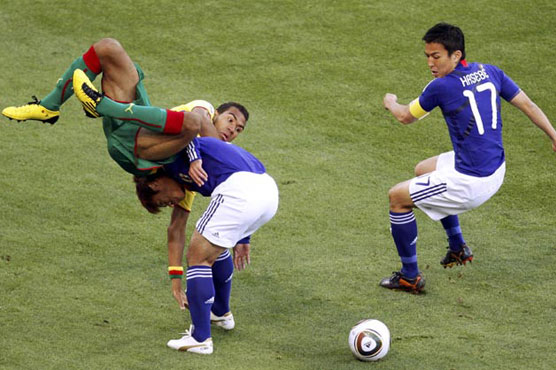
The English Football Association, which holds one of the eight IFAB votes, has been pushing for greater use of technology. After years of lobbying for goal-line technology, the FA gained FIFA approval following a glaring error at the 2010 World Cup when England s Frank Lampard was denied a clear goal.
"Instead of waiting until you get a Frank Lampard to change the rules, as with goal-line technology, we should go on the front foot," Dyke said, advocating trials.
"I think we re going to look back in 20 years time and say, Wasn t it quaint that we didn t use video technology when it was available. "
But IFAB did agree in principle to relax the so-called "triple punishment" rule where a player can make a challenge that results in a penalty kick, a red card and suspension. Now FIFA s disciplinary and legal committees will look at the feasibility of removing the automatic one-match ban in these cases.
"IFAB did agree that this punishment is too harsh and that we must find a solution to the matter," said Patrick Nelson, chief executive of the Irish FA, which was hosting the meeting.
A proposal to allow an additional fourth substitute in extra time was not approved, but will be looked at in further depth by IFAB s advisory panels.
IFAB includes delegates from the four British football associations and FIFA. Since last year, it takes advice from panels of technical and football experts selected from across the world.