Summary Sindh has decided to declare Tharparkar a calamity-hit district after drought destroyed up to 90 per cent of crops, prompting emergency water supply and livestock relief measures.
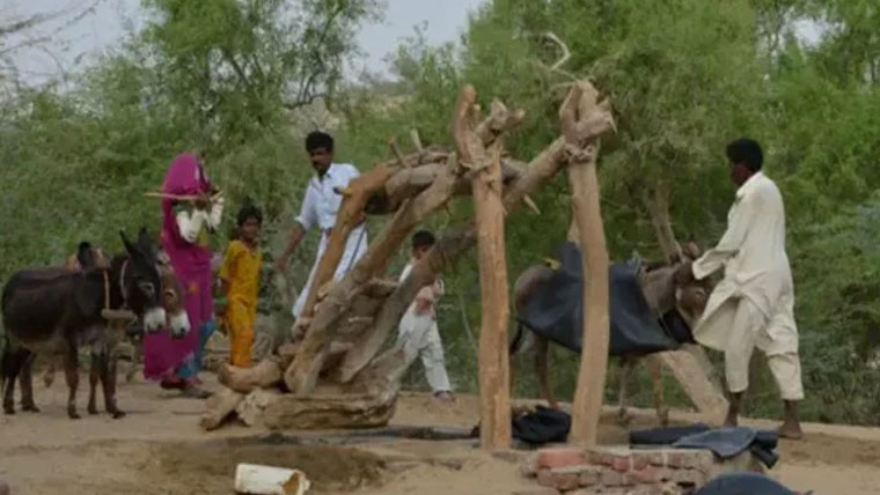
KARACHI (Dunya News) – The Sindh government has decided to declare Tharparkar a calamity-hit district after severe drought-like conditions affected all seven talukas, destroying or rendering unproductive up to 90 percent of crops across the region.
Chief Minister Murad Ali Shah has ordered immediate emergency measures to address the worsening situation, with particular emphasis on drinking water supplies, agricultural losses and the impact on livestock.
The decision was taken during a meeting chaired by CM Shah, where officials briefed him on the extent of the drought and its consequences for communities dependent on agriculture and livestock for their livelihoods.
According to the briefing, all seven talukas of Tharparkar are experiencing drought-like conditions, with between 85 and 90 per cent of crops either destroyed or rendered unproductive. The Agriculture Extension Department estimated overall crop losses at approximately 90 per cent, highlighting the severity of the situation facing farmers across the district.
Uneven and insufficient rainfall has been identified as a major factor behind the agricultural damage. Officials informed the meeting that crops and natural grass dried up before reaching maturity because of irregular rainfall patterns, further aggravating the difficulties faced by local communities and livestock owners.
Rainfall figures presented during the meeting underlined the scale of the problem. In September 2026, precipitation across Tharparkar's seven talukas ranged from just one millimetre to 36 millimetres, leaving large areas struggling with inadequate water supplies.
Emergency measures
Following the briefing, Murad Ali Shah directed the relevant departments to ensure an uninterrupted supply of drinking water to residents of the drought-affected district.
He ordered the immediate repair and restoration of inactive reverse osmosis (RO) plants to increase access to safe drinking water. Authorities were also instructed to restore all existing water supply sources without delay so that affected communities could receive essential supplies.
The chief minister stressed the need for both immediate intervention and longer-term arrangements to address the district's recurring water challenges.
He directed the chief secretary to examine the feasibility of laying a water pipeline from Naukot to Mithi, a proposal aimed at strengthening water supplies to the district. The chief secretary was asked to assess the project and develop long-term planning for ensuring a more reliable supply of water to the area.
The proposed pipeline forms part of the broader effort to improve water access in Tharparkar, where limited rainfall and the drying up of natural resources have intensified pressure on existing supplies.
Livestock support
The impact of the drought on livestock also featured prominently during the meeting, with the chief minister seeking recommendations on measures to support animals affected by the deteriorating conditions.
The drying up of natural grass before maturity has added to the challenges for livestock owners, making support for animals another important aspect of the relief response.
CM Murad Ali Shah instructed officials to assess what assistance could be provided to protect livestock and help communities dealing with the consequences of the prolonged dry conditions.
He also ordered continuous monitoring of relief operations across drought-affected areas to ensure that emergency measures were implemented effectively and reached those in need.
The chief minister said the Sindh government would not leave the people of Tharparkar alone in the face of the crisis and would provide every possible assistance to affected communities.